Richmond Hill High School: The ‘Monument’ of the Community When Completed in 1897

by Vera Tachtaul
Originally published online with the Richmond Hill Liberal, September 21, 2023

With the start of another school year, it is interesting to look back at our school history, as Richmond Hill celebrates 150 years.
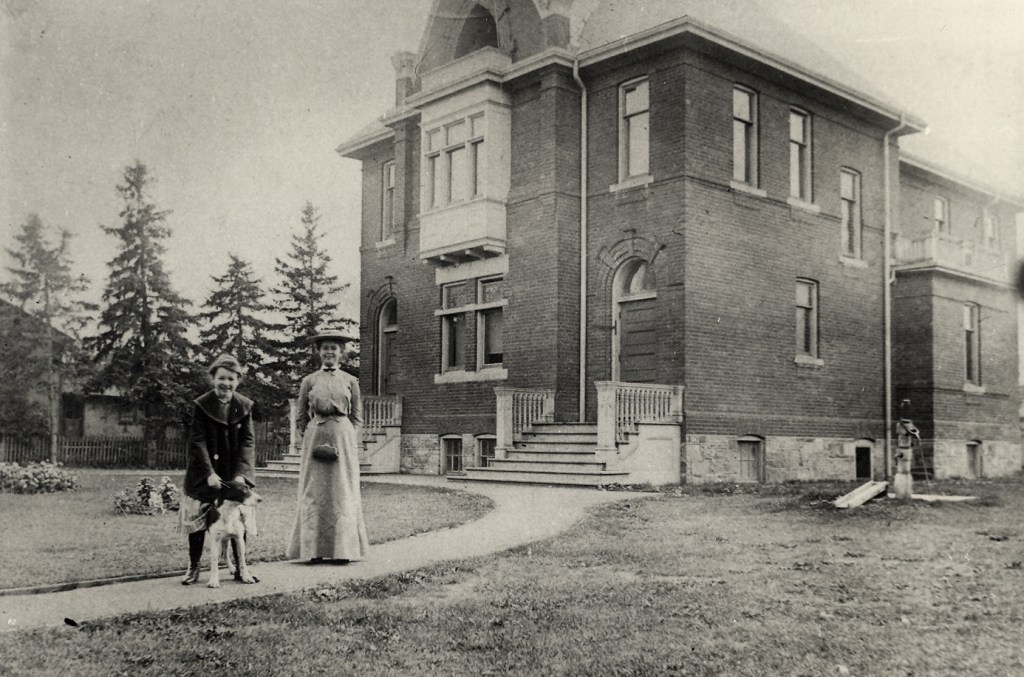
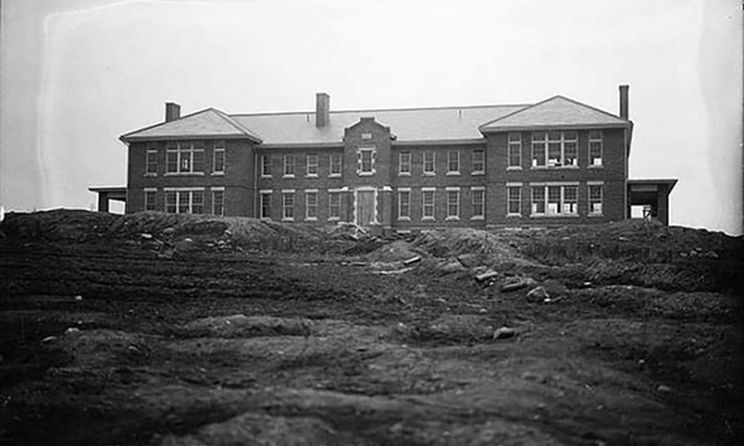
Richmond Hill High School at the corner of Yonge and Wright Streets, circa late-1890s (photograph courtesy of Richmond Hill Public Library, PA-90-004B)

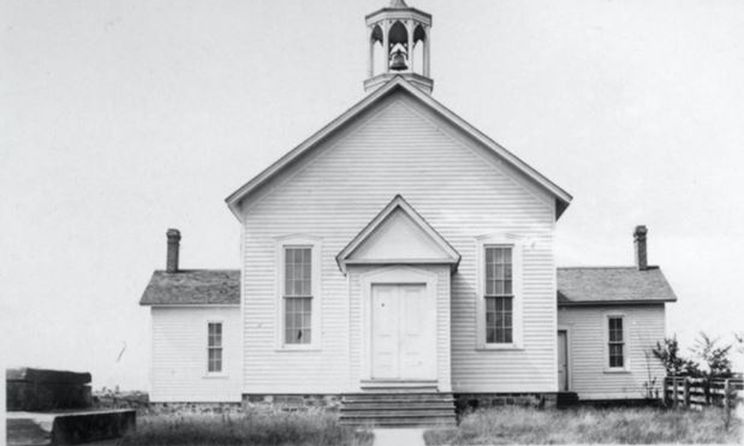
Richmond Hill High School is one of the oldest schools in York Region, and has moved several times in its long history. After Richmond Hill was incorporated in 1873, a school was built behind M.L. McConaghy Seniors’ Centre (as we know it today) that served the community for 23 years until it was destroyed by fire in 1896. The Board of Education set up a makeshift school at Temperance Hall, located at 11 Centre St. W., and rented it for $6 a month. Sixty desks with seats were purchased for $2.95 each from Newmarket Novelty Works.

was marginal compared with today’s standards, and the dilemma of where this new school would be built became the concern. In a letter to the editor of the Liberal, one resident voiced his concerns over the location and the style of this new school, stating that communities were judged by the appearances of the schools that were built there and that the school grounds were just as important for satisfactory educational results.

When the education committee met with the village council to discuss the situation further, three possible locations for the new high school were discussed. One was at the site where the school had burned down, and the other was at Village Park. The third option was at the Richardson estate at the north edge of town, but since no vote was taken, a committee was established to consider the purchase of half an acre of property from the Powell family for $800. Another was to purchase the Hopkins property, which was located at the corner of Yonge and Wright Streets.

Postcard depicting the Richmond Hill High School, circa. 1910 (photograph courtesy Richmond Hill Public Library, Lynett Collection, card-09)

By April of that year, several letters were received by the Liberal from readers distraught about the length of time it was taking to build the new high school. The Liberal’s editor realized that there was enough interest for a regular column from readers who could vent their frustrations to the public. Some wrote in with full lists of disapproving facts. One petition that had been circulated throughout the village claimed that the board had made a mistake in its selection of the Hopkins property site. The board decided to take its plans to the Ministry of Education, where the petition was disallowed. Those named in the petition who had favoured the Yonge Street site saw the old grammar school of 1851 get torn down, which was donated by Abraham Law, who became the first reeve of Richmond Hill.

The board had already approved the first site, had received the $3,000 needed to build the school and had asked for the $1,500 for costs associated with the planning and design of the building from John Harris.

In May, it was again suggested that the Hopkins property be purchased at Yonge and Wright Streets. The board, which met weekly, had also considered six other locations, but it was Mr. McConaghy who pointed out to the board that Chapter 57 of Section 46 of the High School Act precluded Mr. McNair from selling the Hopkins property to the board, since he was also the executor. He was also not allowed to vote. It was moved that the chair and secretary act as a committee and buy the Hopkins one-and-a-quarter-acre lot for $1,000.
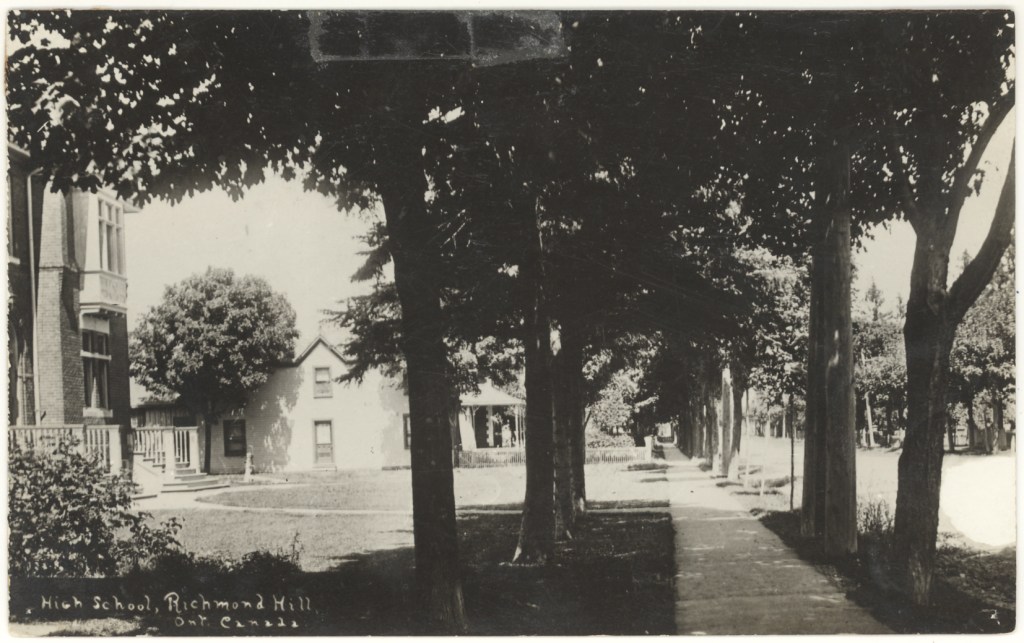
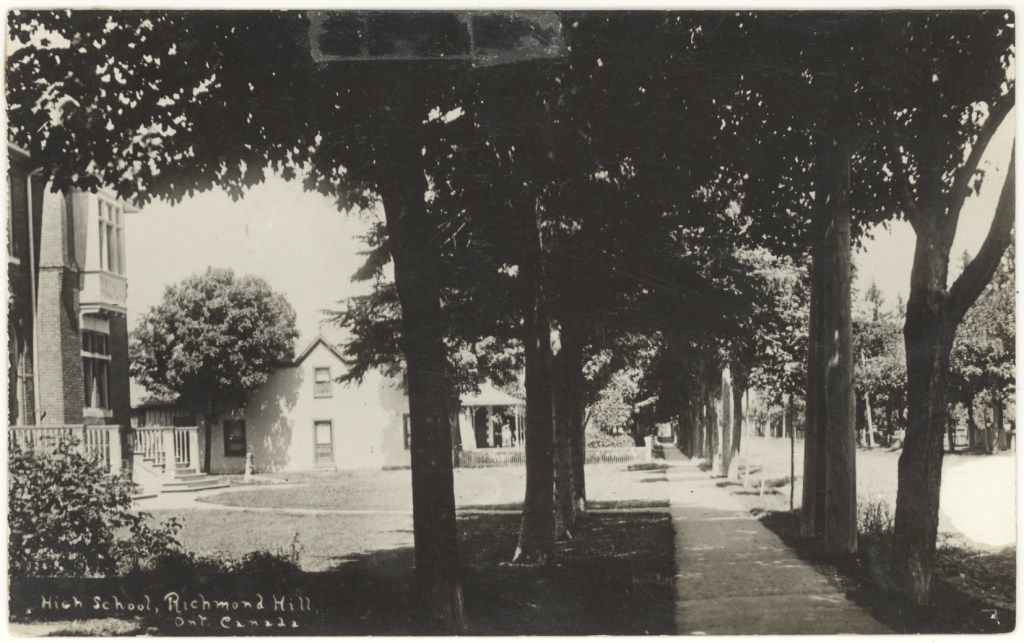
Sidewalk in front of the Richmond Hill High School, circa. 1920s (photograph courtesy Richmond Hill Public Library, Lynett Collection, card-19)

Construction of the brand-new high school officially began at the corner of Yonge and Wright streets in June 1897, just a few weeks before village residents celebrated Queen Victoria’s Diamond Jubilee. Masonry work was completed by J. Kelly and the lumber work by L. Innes and Sons. J. Francis Brown, who was a leading and remarkably prolific architect in the industry at the time, was the architect for the project.

The new school was officially opened on December 30, 1897, just one year from the time the former one had been burned down. There was a great pride of accomplishment felt in the community when the new high school was finally completed. It was referred to as a “monument” to both its builders and architects. Its exterior laid out in red brick with grey stone foundation accommodated two entrances, as well as a rear entrance to the basement sitting neatly on the Mill Street lot.

With well-lit classrooms and a science room “supplied with every apparatus for practical work,” the entire building was heated in the winter and ventilated in the summer, and was perfectly modern for its time.
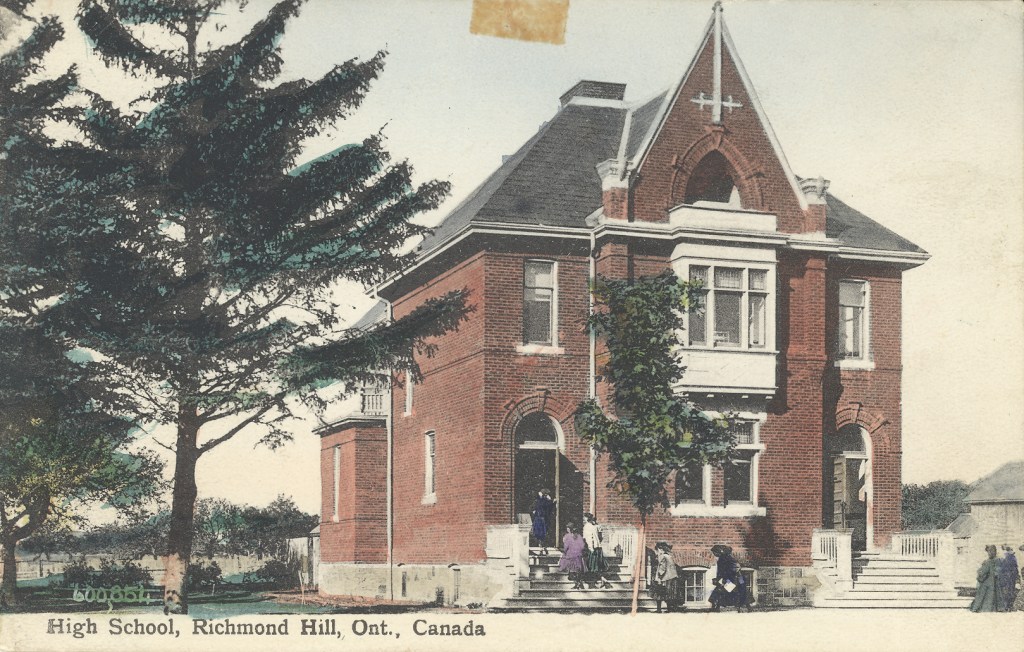
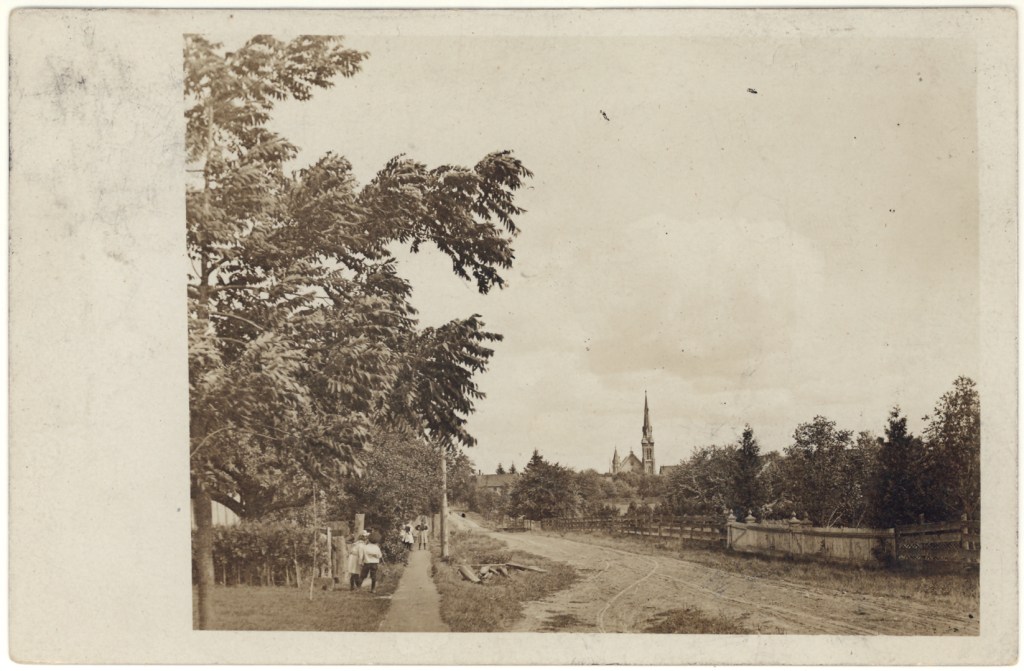
Postcard depicting the Richmond Hill High School (photograph courtesy of Richmond Hill Public Library, Lynett Collection, card-02)

Today, the building still stands proudly at the corner of Yonge and Wright Streets, and it’s worth remembering its history because it recognizes the hard work and effort of the many people involved with this project.

Read the full account of the official opening of the school on the front page of the January 6, 1898, issue of the Liberal, available in the Richmond Hill Public Library’s historic local newspaper archive.
Richmond Hill 150 Years Ago: Streets and Sidewalks

The effort Richmond Hill’s early councils put into streets and sidewalks set the stage for the growth and development seen in the city today, writes Jim Vollmershausen

By Jim Vollmershausen
Published by the Richmond Hill Liberal, Tuesday, May 16, 2023

Richmond Street looking east, circa. 1909, showing the road and sidewalk. The United Church (formerly Methodist Church) can be seen in the background. – Courtesy of RHPL

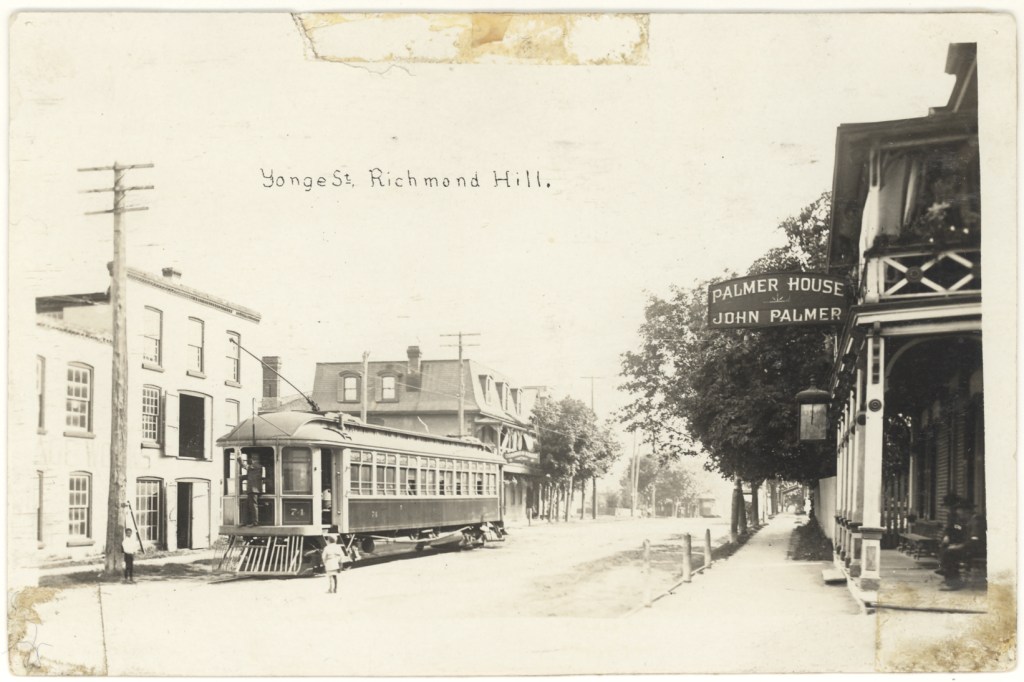
The new Richmond Hill council met for the first time on Jan. 20, 1873 after a municipal election earlier that month. It’s easy to imagine that expectations were high — they had waited a long time to reach official village status, and there was work to be done. One of the reasons people were anxious to manage their own affairs, after all, was the complaint they were being ignored by the two townships (Vaughan Township west of Yonge Street and Markham Township east of Yonge Street) that had shared responsibility for their community. The condition of Yonge Street, their main thoroughfare, had to be top of mind, and how their village would grow without good streets and sidewalks.

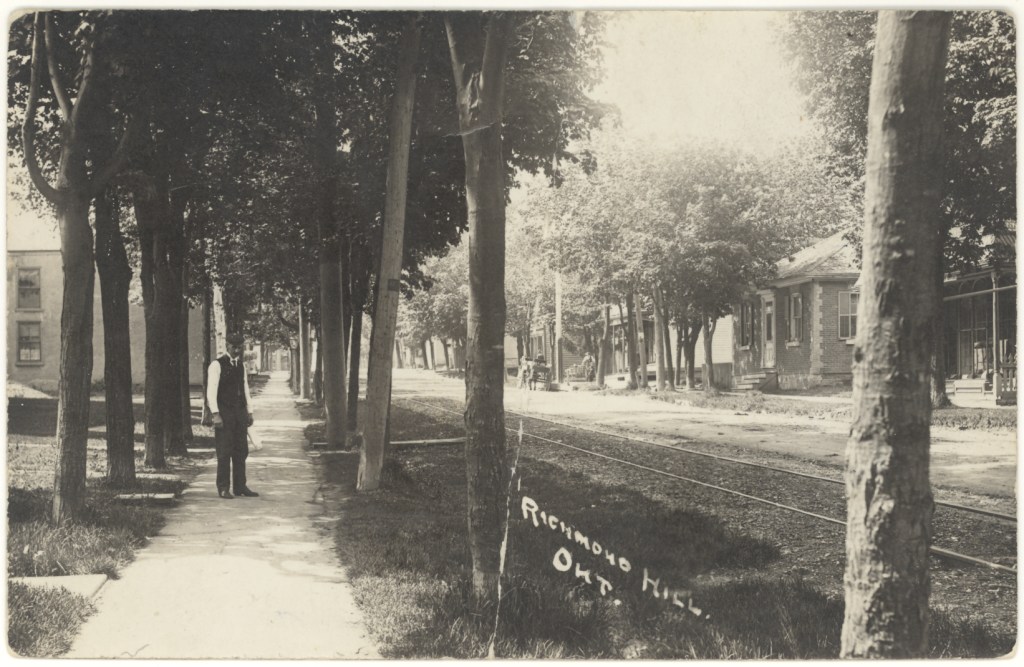
The sidewalk along west side of Yonge Street in front of the old High School at the corner of Yonge and Wright Streets, circa. 1910s. – Courtesy of RHPL

Of necessity, much of the new council’s early efforts were devoted to civic appointments and the passage of bylaws governing a variety of activities in the village, ranging from determining conditions for tavern and business licences to bylaws setting terms for snow, ice and dirt removal and dog taxes. In addition, a considerable portion of their time was taken up by the need to deal with education. A new high school was urgently needed and much of the first council’s time and funds went to meet that requirement. As a result, other areas just didn’t get much attention, including streets and sidewalks. Records show, for example, that in all of 1873, only $201.69 was devoted to street improvements.

From that meagre start, improvements to Richmond Hill’s street network gradually took a bit more precedence in council deliberations and expenditures. Over the next 10 years, council minutes demonstrate that upgrading their streets and sidewalks was becoming more and more important. Funds were provided, for example, to build or repair the village’s board or plank sidewalks. This meant two-metre-wide sidewalks on Yonge Street and one metre wide on side streets. Funding was also provided to build new roads in the village, which led, for example, to the construction of Trench Street as an alternate north-south connection between Richmond and Mill streets on the western side of Yonge Street. One interesting project was a decision to purchase second-hand gas-fired street lamps from the Village of Yorkville for the illumination of Yonge Street. The used lamps cost $4 each.

Yonge Street looking south from the corner of Arnold Crescent, ca 1910s. – Courtesy of RHPL

Even with these improvements, municipal funds for streets and sidewalks did not loom large in the overall scheme of things. Richmond Hill, after all, was still a small village — in 1877, four years after its incorporation, its population consisted of only 659 people, only 151 of which were ratepayers. The village raised $1,667 in municipal taxes that year and just over $1,000 for education. Roads and bridges only accounted for $287.

Though funds were obviously limited, council did continue to approve projects designed to make it easier to get around a village that was just starting to grow. During the new village’s first 15 or 20 years, when they had much more say in the decisions that affected them, main streets were widened and their condition was improved, new streets were constructed to accommodate growth and provide space for new housing and commercial developments, nighttime lighting was provided, primarily on Yonge Street, and sidewalks were laid or improved along the busiest streets.

Yonge Street, looking south with the road, sidewalk and radial railway tracks, circa. 1912. – Courtesy of RHPL

Then, as now, streets and sidewalks had to share their place in a municipality’s list of priorities with many other issues. In the 1870s and 1880s, that included the development of parklands, the funding of a fire brigade, and financial assistance for “indigent persons” and the “aged and Infirm.” Over the last 150 years, though, the efforts that early councils put into streets and sidewalks set the stage for the kind of development and growth we are experiencing today.

Jim Vollmershausen is president of the Richmond Hill Historical Society. The society can be found online at www.rhhs.ca.

Celebrating 150 Years of Richmond Hill, 1873-2023

by Andrea Kulesh
Published in the Richmond Hill Liberal, February 3, 2023

Although Richmond Hill is a bustling, thriving city today, there was a time it struggled to meet the population requirements needed to incorporate into a village, writes Andrea Kulesh

Richmond Hill is a busy, thriving city but it wasn’t always so. In the early 1800s, the area was sparsely populated. It was located along Yonge Street, which was the main road leading to the north from York (Toronto) for settlers and the businesses that served them. Although Richmond Hill was a recognized village with a post office, it took many years to accumulate (or attract) enough people to be able to incorporate a village in Upper Canada (Ontario). It seemed impossible given the requirements for the number of inhabitants needed to become a village.

In 1853, there were rumblings of incorporation, but it was out of the question without the required population. One of the main issues was the division of the village on Yonge Street, with Vaughan Township on the west and Markham Township on the east. Split between two rural townships, Richmond Hill’s urban issues were often ignored. The village remained divided, delaying the establishment of its own identity, though members of the community served on the Vaughan and Markham councils. One thousand residents were required to incorporate a village, and that was more than twice the population of Richmond Hill in 1853. Public meetings were held, but to no avail — they were simply short of the necessary population.

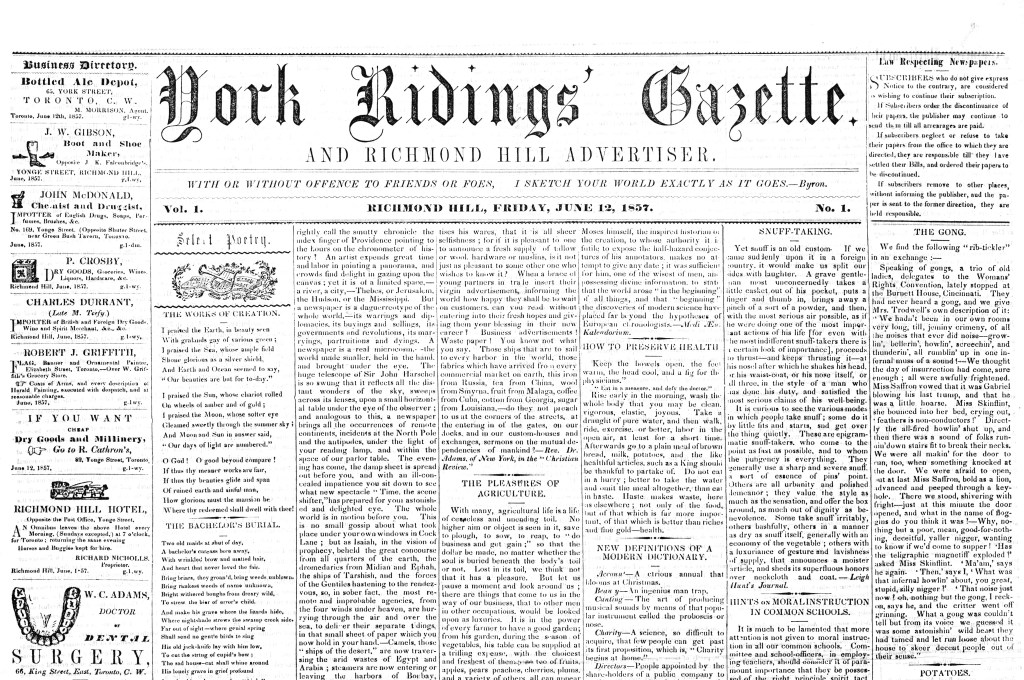
Four years later, in 1857, due to political changes, a special act was introduced with a reduced population requirement of 750. This prompted community leaders to reopen discussions of incorporation. The York Ridings’ Gazette newspaper set out to convince the community incorporation would be a positive step, helping to improve sidewalks, sewers, organized fire prevention and many sanitary problems that needed addressing. In fact, at that time there were the required 750 residents, but the community borders were considered too large of an area. (From Lot 42, just south of Major Mackenzie and Yonge Street, to Lot 52, just north of Elgin Mills, east to Bayview Avenue and west to Bathurst Street). A meeting was held on Oct. 30, 1857 for the residents to consider this recommendation again. Amos Wright Esq., M.P.P. was called to the chair with Matthew Teefy appointed secretary. “Various speakers claimed they were contributing liberally through taxes to Markham and Vaughan townships and receiving little or nothing in return.” Resolutions were submitted and “advocated with as much force by the gentlemen whose names are attached thereto. Moved by George P. Dickson Esq., seconded by David Bridgford Esq.” Once again the resolutions were discussed but the petitioners were defeated. The issue could not be passed with the current size of the borders. The area was judged too extensive — with Elgin Mills now included. Richmond Hill and was considered too “expansionist” in 1857.

A portion of the front page of the York Ridings' Gazette and Richmond Hill Advertiser from Friday, June 12, 1857 (courtesy Richmond Hill Public Library)
A portion of the front page of the York Ridings’ Gazette and Richmond Hill Advertiser of Friday, June 12, 1857 (courtesy Richmond Hill Public Library)

It would take a further 15 years to revisit incorporation. A newly reduced area was to make it all possible. Borders were altered and in 1872, it seemed likely that incorporation would pass. By this time, every ratepayer signed the petition and was presented to York county council. The bylaw was passed without delay, the proposal was approved on June 18, 1872, and Richmond Hill was finally set on the path to its municipal future. The date was set for Jan. 1, 1873.

An advertisement to elect Abraham Law as Reeve. Ad reads as follows: Municipality of Richmond Hill, V. R. Your vote and interest are respectfully submitted for A. Law, J. P. as Reeve at the forthcoming election (from Early Days in Richmond Hill by Robert Stamp)
An advertisement promoting Abraham Law for Reeve in the January 6, 1873 Richmond Hill election. (from Early Days in Richmond Hill: A History of the Community to 1930 by Robert Stamp; courtesy Richmond Hill Public Library)

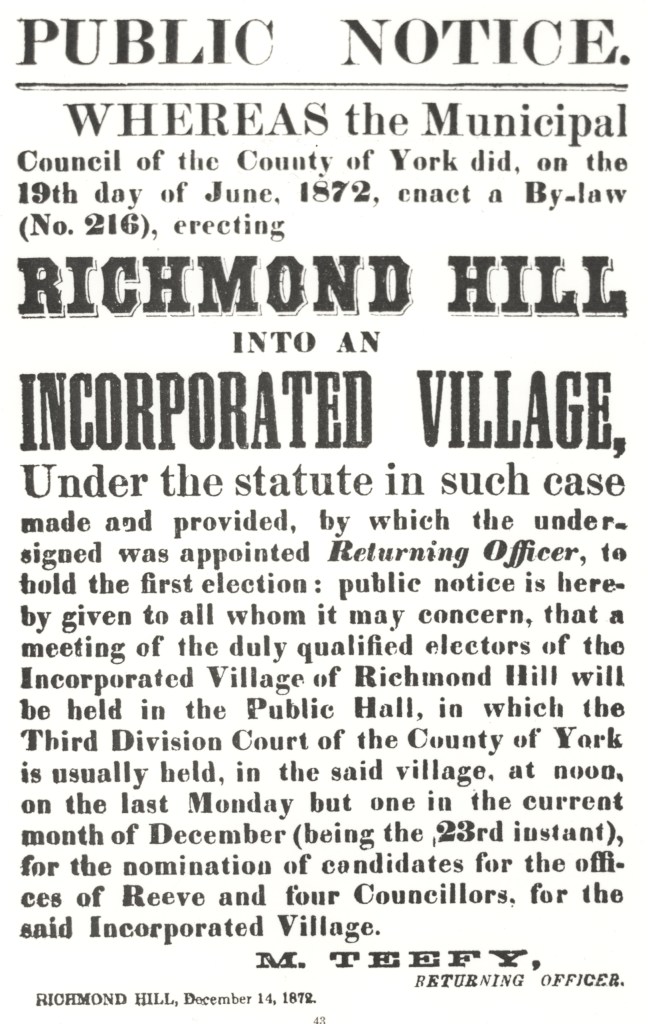
An official announcement declaring the new village status was printed and distributed by Matthew Teefy — the returning officer on Dec. 14, 1872 — inviting nominations of candidates for the new offices of Reeve and four councillors, for the “said Incorporated Village.” The date for the voting was set for Jan. 6, 1873. Eligible voters turned out for the first time to elect their village council. The results announced by the York Herald, were:

  • Abraham Law — 1st Reeve of the Village of Richmond Hill.
  • Matthew Teefy (Postmaster) — Treasurer.
  • William Warren (Farmer) — Councillor.
  • William Powell (Farmer) — Councillor.
  • Jacob Brillinger (Farmer) — Councillor.
  • David Hopkins (General Store Owner) — Councillor.
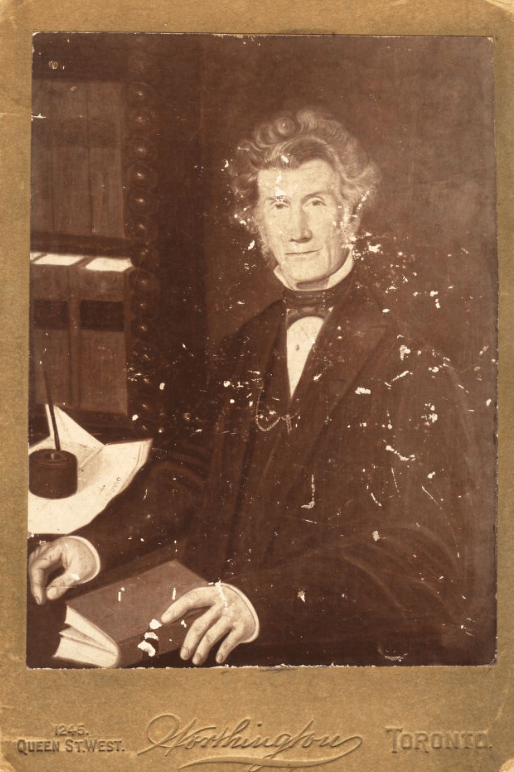
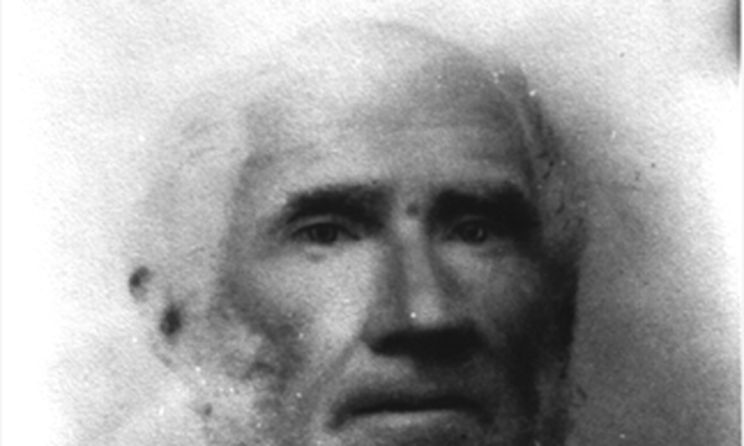
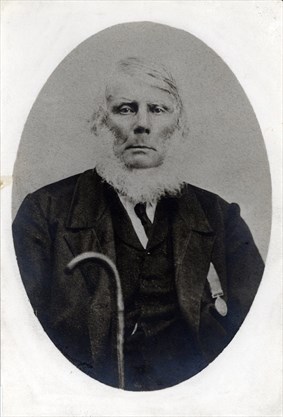
Portrait of Abraham Law, taken by George Worthington (courtesy Richmond Hill Public Library)
Abraham Law, Richmond Hill’s first Reeve. Photograph taken by George Worthington who ran a photography business at 1245 Queen Street West, Toronto (courtesy Richmond Hill Public Library)

The first council meeting on Jan. 20, 1873, was located at the Division Court Room at the Robin Hood Hotel. Civic appointments were decided with Postmaster Matthew Teefy named village clerk and treasurer, a choice position he held for the next 31 years. The following citizens were appointed to the various positions:

  • George A. Barnard & Robert Law (the Reeve’s son) as Auditors.
  • Dennis O’Brien as Assessor.
  • John Brown as Licence Inspector.
  • John Velie (owner of the hotel where council met) as Pound Keeper.
  • Benjamin Davidson as Overseer of Highways.
  • Frederick Crawford as Fire & Nuisance Officer.
  • Robert Robinson, James Freek, & John Arnold as Fence Viewers.
  • James Daniels as Collector of Dog Taxes.
Public Notice. Whereas the Municipal Council of the County of York did, on the 19th day of June, 1872, enact a By-law (Number 2016), erecting Richmond Hill into an incorporated village, under the statute in such case mad and provided, by which the undersigned was appointed Returning Officer, to hold the first election: public notice here-by given to all whom it may concern, that a meeting of the duly qualified electors of the Incorporated Village of RIchmond Hill will be held in the Public Hall, in which the Third Division Court of the County of York is usually held, in the said village, at noon, on the last Monday but one in the current month of December (being the 23rd instant), for the nomination of candidates for the offices of Reeve and four Councillors, for the said Incorporated Village. M. Teefy, Returning Officer, Richmond Hill, December 14, 1872
The Public Notice published by Matthew Teefy, Returning Officer for the nomination of candidates for the Village or Richmond Hill’s first election (courtesy Richmond Hill Public Library)

The subsequent monthly meetings would see a succession of bylaws adopted. Finally, the first Richmond Hill council was able to take responsibility for setting the path to the future of what has become the City of Richmond Hill, 150 years later.


Andrea Kulesh is vice-president of the Richmond Hill Historical Society.

Richmond Hill’s Bond Lake Park was Once a Major Attraction

Little evidence of park remains, but it was a happening spot in the first 20 years of the 20th century, writes Jim Vollmershausen
Originally published in the Richmond Hill Liberal, September 15, 2022

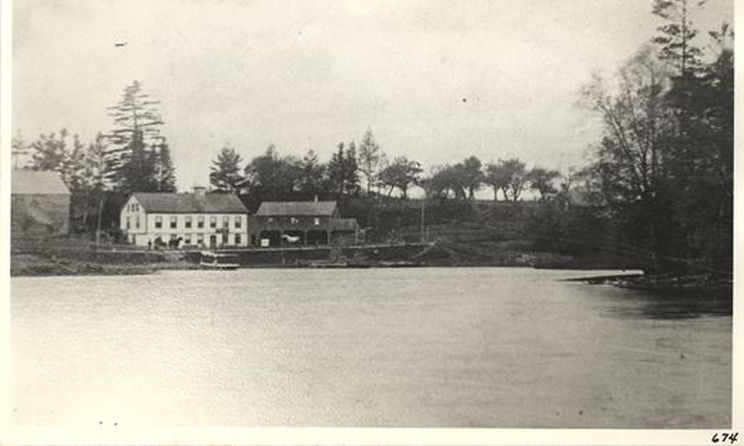
The Bond Lake Hotel and stables, circa 1920s. - Richmond Hill Public Library photo
The Bond Lake Hotel and stables, circa 1920s. – Richmond Hill Public Library photo

Today, Bond Lake, just south of Oak Ridges on Yonge Street, is a popular part of the Oak Ridges Trail, whether as an entry to the full length (260 kilometres) of the trail or the short loop around the lake itself. One has to wonder if the hundreds of people who enjoy the lake trails today realize that, 120 years ago, thousands of people were enjoying what the lake and its park had to offer.

From the earliest days of Richmond Hill, settlers and townsfolk used Bond Lake for fishing, swimming and boating in the summer, and curling in the winter. This casual use changed after 1899, though, when the Metropolitan Railway, which had just reached Richmond Hill the year before, began to extend its line north toward Newmarket. The railway needed more power to supply the line as it was extended, and Bond Lake provided a good supply of water for the generating station they built near its shore.

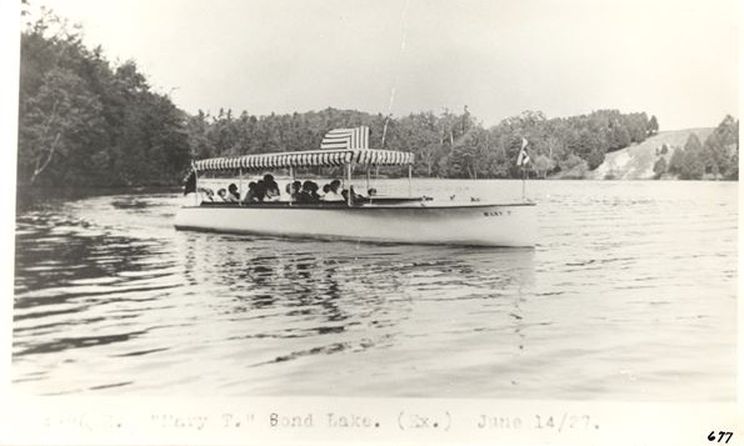
The Mary T. cruising Bond Lake in June 1927. - Richmond Hill Public Library photo
The Mary T. cruising Bond Lake in June 1927. – Richmond Hill Public Library photo

Knowing the lake was already a popular spot, the railway bought the farm surrounding the lake. Soon, landscaping was underway and railway siding and the Bond Lake Station were built to welcome the tourists they hoped to attract to the lake.

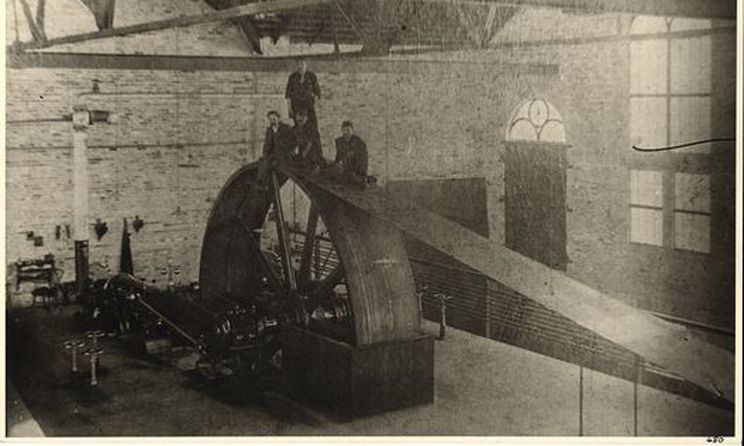
Inside the Bond Lake Powerhouse, circa 1900. The fly-wheel was approximately 18 feet in diameter. - Richmond Hill Public Library photo
Inside the Bond Lake Powerhouse, circa 1900. The fly-wheel was approximately 18 feet in diameter. – Richmond Hill Public Library photo

The railway did its best to try to create a real tourist attraction just a short rail ride from the growing Toronto area. Using surplus power from the generating station, Bond Lake Park became the first “electric” park in Ontario, and it quickly began to experience amazing attendance. In the 1901 season alone, 60,000 visitors passed through the park gates. This was great news for the railway — in addition to their park visit, the vast majority of these tourists also paid fares on the railway to get there. It is certain that local businesses also benefitted from this influx of visitors. A nearby tavern and a local hotel would have enjoyed a real increase in business as a result.

The railway did not skimp on park amenities. In addition to traditional picnic facilities, pleasant landscaping and access to swimming, fishing and boating, the park soon boasted a large concert pavilion, baseball grounds, a wading pool and a merry-go-round. Sunday school and company picnics were popular, and the park also attracted family groups and young couples. Rowboats were available for rent, or you could tour the lake in a larger launch.

The Radial Railway arriving at Bond Lake Park in June 1924. - Toronto Public Library photo
The Radial Railway arriving at Bond Lake Park in June 1924. – Toronto Public Library photo

The Metropolitan Railway Guidebook was eloquent in its praise for the park and its offerings. Clean air and cool breezes, clean water and few mosquitoes were all part of the pitch to attract visitors north, hopefully by rail. It touted the park, with its lake and trees and amenities, as a perfect place to relax, enjoy the outdoors, or even find romance through its pleasant promenades and dancing in the pavilion to a small orchestra.

Bond Lake Park was a going concern through the first 20 years of the 20th century, though its future came into question when the Toronto Transit Commission acquired the Metropolitan Railway Company in 1922. By 1929, the TTC was ready to close down the Radial Line north of Toronto due to poor ridership, and its primary interest in transit left little room for the park at Bond Lake. The park saw its last visitors in 1929.

Today, there is little evidence of Bond Lake Park to be found. Two crumbling brick pillars mark the old entrance on Yonge Street, and scattered along the trail beside the lake, hikers might find the remains of a few foundations or a twisted and partially buried merry-go-round. It’s difficult to imagine 60,000 visitors enjoying this beautiful spot in 1901.

—Jim Vollmershausen is the president of the Richmond Hill Historical Society

The Story of Richmond Hill’s ‘Langstaff Corners’ is One of Constant Change

The intersection of Yonge Street and Langstaff Road (Hwy. 7) has changed so much, the roads no longer intersect, writes Andrea Kulesh

Published online by the Richmond Hill Liberal on June 23, 2022

An image of Cook's Hotel, circa 1910, Langstaff Corners in Richmond Hill. - TPL Digital Archive
Cook’s Hotel, circa 1910, Langstaff Corners in Richmond Hill. – TPL Digital Archive

In the late 1700s, European settlement began in the area where these two roads would be built. The land on the northwest corner, Lot No. 35, was purchased by the Abner Miles family, some of the earliest arrivals. John Langstaff arrived from New Jersey a few years later and soon met and married Lucy Miles. Upon her father’s death, around 1808, they took ownership of the property. John was a very industrious person. He began as a teacher in the Thornhill area, joined the York militia to fight in the War of 1812 and, upon returning, supplemented farming with multiple businesses including a store, a smithy and factories for the manufacture of pails, shingles and eaves troughs. The area soon came to be known locally as Langstaff Corners.

We have all noticed that Richmond Hill’s Yonge Street corridor is rapidly changing. Future plans for major intersection highrise “hubs” are underway and many well-known “local” corners will alter so much that they will become unrecognizable. One such “corner” that has already changed multiple times is Yonge Street and Langstaff Road (Hwy. 7). Now-a-days, Hwy. 7 doesn’t even intersect — it is a raised roadway with ramps for access to Yonge Street.

Yonge quickly became the major link north from York. Businesses were taking root to serve local farms and to facilitate travel more easily on Yonge. By the 1830s, the Upper Canada Legislature had authorized tolls to be collected to fund road improvements, and Toll Gate No. 3 was erected at the intersection. By mid-century, Langstaff Corners had become a major stopping place for travellers on the road from Toronto to Richmond Hill and north. The toll house stood on the southwest corner and alongside it, Langstaff’s first post office opened in 1870. On that same corner, for some years, the Langstaff family enjoyed riding around an oval half-mile racetrack. The Yorkshire House, a hotel under the management of William and Jane Cook occupied the northwest corner. The Munshaw family farmed the southwest corner throughout much of the 19th century.

The original Langstaff farm stayed in the family until 1893 when the Boyle family purchased the property. The City of Toronto subsequently bought the land in 1911, just prior to the First World War, when it became part of the city’s Industrial Farm and came to be known as the Langstaff Jail Farm or the “Jail Farm.” This institution was active until the late 1950s when the operation was finally closed. The land stood unused for years with many of the buildings standing empty.

Photograph of the main building of the "Langstaff" Jail Farm around 1960. The front faced north and the back side was on Langstaff Road. (Toronto Industrial Farm). There were over 30 buildings on this site — all since demolished. - City of Toronto archives
This photo is the main building of the “Langstaff” Jail Farm around 1960. The front faced north and the back side was on Langstaff Road. (Toronto Industrial Farm). There were over 30 buildings on this site — all since demolished. – City of Toronto archives

In 1978, the Langstaff GO Station was opened along the Richmond Hill Railway Line, replaced by a new, larger and more modern one in 2005. Also, in 1978, proposals for a planned hydro corridor were tabled resulting in a large swath of the Miles/Munshaw/Langstaff farmland being utilized for this purpose, paralleling Hwy. 7 on the north side by 1985.

By 1982, Toronto council began selling the Langstaff Jail Farm property, (it encompassed a desirable block of real estate bounded by Yonge, Bayview Avenue, Hwy. 7 and 16th Sideroad). Developers quickly purchased this very large acreage and an incredible amount of development began quickly including housing, stores, schools, parks and roads. The new High Tech Road became the east-west gateway from Yonge to Bayview with multiple big box stores lining the south side. “Old” Langstaff Road remained, but the access was moved south of Hwy. 7 off Yonge Street.

The ever changing Langstaff Corners continues to have huge pressure on it. The Ontario government has announced its intention to increase population density through its proposed “transit oriented community” (TOC) — planned developments in the areas located on both sides of Hwy. 407 at Yonge Street — a new skyline will appear. In the Toronto Star on April 16, 2022, Ontario Infrastructure Minister Kinga Surma was quoted as saying “a TOC is a place where people will wake up in the morning, take an elevator down, perhaps drop off their child at daycare, access a (transit) station, go to work, come back home on transit and pick up something for dinner at a local grocery store.” Langstaff Corners will be developed for this new purpose.

Photograph of John Langstaff - Early Days of Richmond Hill
John Langstaff – Early Days of Richmond Hill

Such is the future of the corner where Toll Gate No. 3 stood for the purpose of collecting tolls to improve a very early Yonge Street — the gateway to the north. It will take years for this plan to come to fruition, but the ongoing history of “Langstaff Corners” continues …

-Andrea Kulesh is the vice-president with the Richmond Hill Historical Society

A Rail Link Between Richmond Hill and Toronto

On Nov. 19, 1896, the first electric train of the Metropolitan Street Railway Company arrived in Richmond Hill
by Jim Vollmershausen
originally published in The Liberal, February 2022

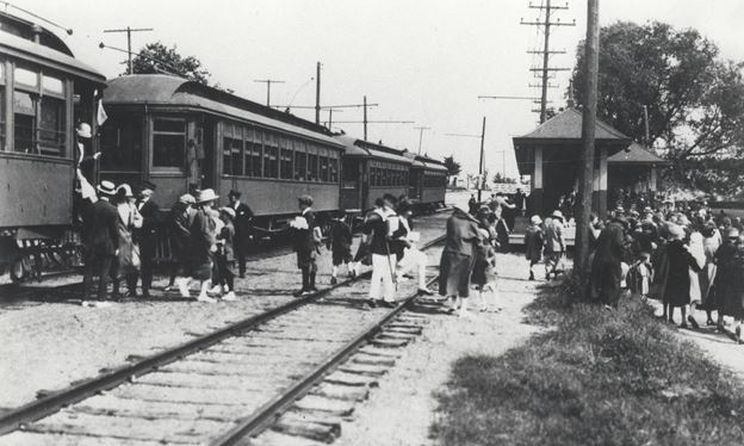
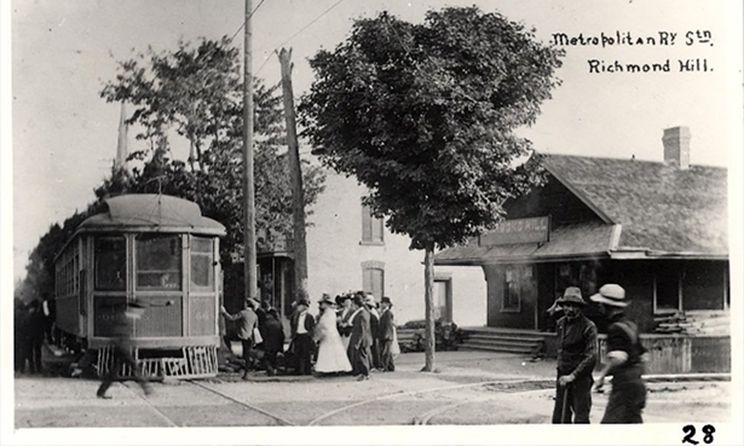
A photograph of passengers boarding car 56 at the Metropolitan Railway Station in Richmond Hill at Yonge Street and Lorne Avenue. - Courtesy of RHPL
A photograph of passengers boarding car 56 at the Metropolitan Railway Station in Richmond Hill at Yonge Street and Lorne Avenue. – Courtesy of RHPL

In the last year or so, there has been some excitement in Richmond Hill about the extension of subway service to the City. People are looking forward to a fast and convenient connection to Toronto.

This isn’t the first time, though, that citizens of Richmond Hill have been excited about the development of a rail link with Toronto. In 1896, there had already been a number of years of speculation, planning and ultimately the construction of a rail link connecting Richmond Hill and the northern sections of Toronto’s Electric Rail System. On November 19, 1896, the first electric train of the Metropolitan Street Railway Company arrived in Richmond Hill along a track that paralleled Yonge Street. Residents now had an opportunity to travel to Toronto in 45 minutes rather than the 3 hours it took by stagecoach. The cost was 40 cents a trip or 60 cents return, and there were four round trips a day.

An early casualty of this new development was John Thompson’s Stagecoach Line, but, by all accounts, other businesses in Richmond Hill flourished, and the population grew. Richmond Hill was so easily reached from Toronto, in fact, that predictions were made that Richmond Hill could become a suburb of the much bigger city to the south. By 1899, the benefits of a Railway connection with Toronto were extended to Newmarket, as well.

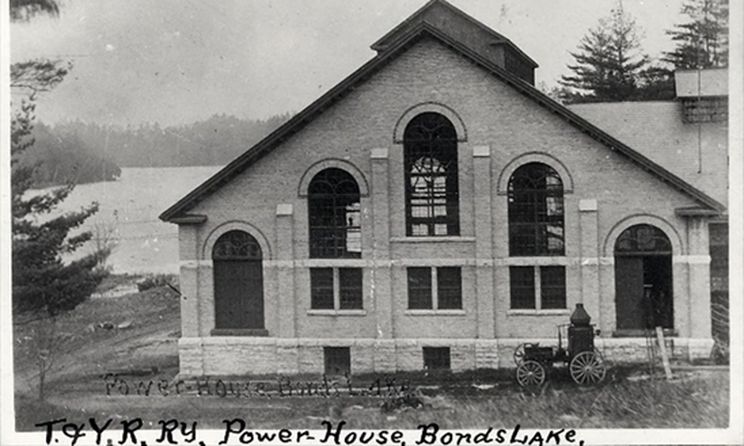
Metropolitan Street Railway Company (later the Toronto and York Radial Railway Company) power house at Bond Lake. - Courtesy of RHPL
Metropolitan Street Railway Company (later the Toronto and York Radial Railway Company) power house at Bond Lake. – Courtesy of RHPL

The Metropolitan Street Railway Company contributed a further benefit to Richmond Hill when it bought some land near Bond Lake to build a generating station, and subsequently developed the first park in Ontario with electric lights. Residents and tourists were able to take advantage of baseball facilities, a pavilion and, of course, swimming, boating and fishing.

In 1904, the Metropolitan Street Railway Company was purchased by the Toronto and York Radial Railway Company, a larger company that meant more tracks in Ontario and more trains in Richmond Hill. 1904 also brought a second Railway to Richmond Hill, when the James Bay Railway Company built a station in as a stop on its freight line from Toronto to Sudbury — Richmond Hill residents and businesses were now blessed with reliable rail transportation for both freight and passengers.

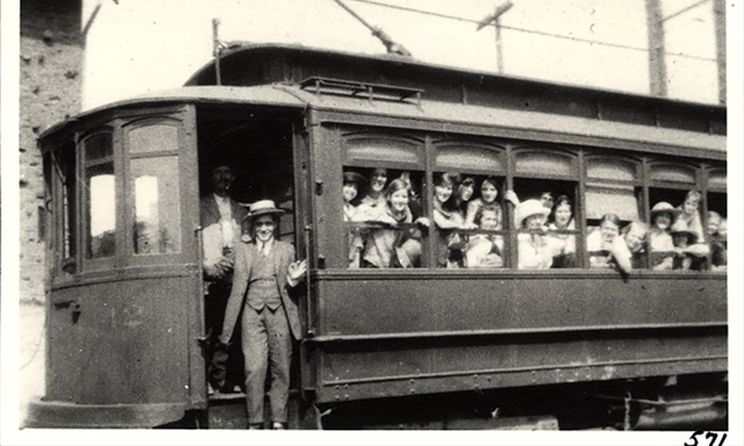
Children packed onto car 42 of the Toronto and York Radial Railway, ca. 1920s. - Courtesy of RHPL
Children packed onto car 42 of the Toronto and York Radial Railway, ca. 1920s. – Courtesy of RHPL

In 1912, Richmond Hill officials were able to take further advantage of the Railways presence when they arranged a deal with the Toronto and York railway Company to buy surplus power from the Railway’s generating station at Bond Lake. The result was that, on Dec. 30, 1912, the first electric street lights were lit in Richmond Hill. Soon after, stores and shops were also able to benefit from this new development, as well as many homes.

The Radial Electric Railway continued to serve Richmond Hill, even after the Toronto Transit Commission became the owner in 1922. By 1929, though, the Commission was planning to close the service due to poor ridership, a move that the communities north of Toronto were not happy with. In 1930, Richmond Hill, along with North York, Markham, and Vaughan purchased the railway, renamed it the North Yonge Railways, and carried on serving their communities for another 18 years.

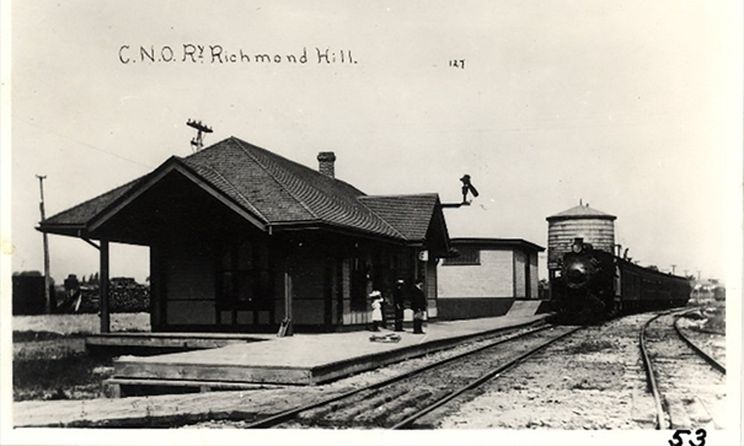
A train arriving at the Canadian Northern (later Canadian National) Railway station in Richmond Hill. - Courtesy of RHPL
A train arriving at the Canadian Northern (later Canadian National) Railway station in
Richmond Hill. – Courtesy of RHPL

The end of the Electric Railways came with the rationing of power in Ontario after the end of the war. The North Yonge Railways was a huge consumer of electricity, so a temporary fix was found in 1948 by replacing the trains with buses. Though initially unpopular, the buses caught on quite quickly, ridership ballooned and profits were realized. A vote in 1949 did away with the old railway, and the Electric Railway was no more.

Though Richmond Hill has benefited from GO Trains for some time, the notion of a regular subway connection with Toronto is as exciting now as electric train service was in 1896.

—Jim Vollmershausen is the president of the Richmond Hill Historical Society

Patterson Village Holds a Special Place in Richmond Hill’s History

The Patterson Brothers established the company town known as ‘The Patch’ in 1871, writes Vera Tachtaul

by Vera Tachtaul, Richmond Hill Historical Society

Published in the Richmond Hill Liberal, Thursday, October 28, 2021

Exterior shot of Patterson Church – Ruth Redelmeier

Patterson Village once stood by a wooden sidewalk that stretched from Yonge Street, along Vaughan Side Road (known today as Major Mackenzie Drive) to the factory site, where once long ago, many men commuted by foot from Richmond Hill.

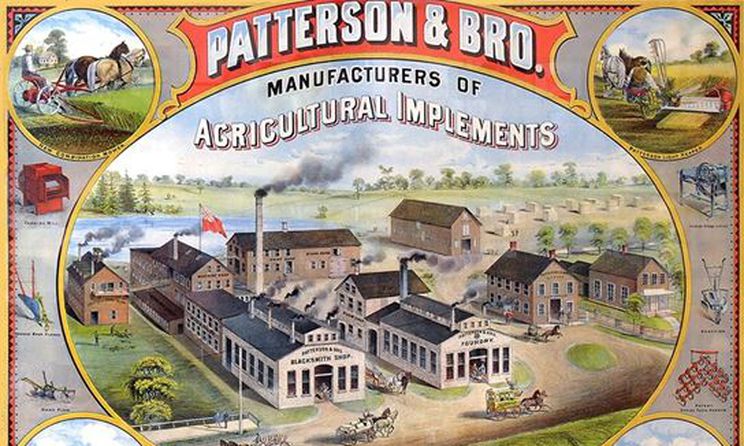
Peter Patterson and his brothers, Alfred and Robert, who had moved from New York state to Upper Canada in the late 1840s to market a fanning mill (a machine for screening grain), had done so well in Richmond Hill that they decided to purchase 100 acres of land on the north side of Vaughan Sideroad, west of Bathurst Street, to expand the business.

The Patterson brothers grew their business around a sawmill and a blacksmith shop, and by 1855, an agricultural implement factory known as Patterson and Brothers Agricultural Manufacturers was established.

To accompany this enterprise, the Patterson Brothers established their own “company town.” Patterson Village (which was sometimes referred to as the ‘The Patch’ by many local residents) was a tightly knit town that included about 25 cottages for married employees, a boarding house for single workers, and had a population of about 200 people by 1871.

There was a Methodist Church, a post office, and a school established by 1872 for the convenience of its workers. Wages were exceptional, being based on the day’s labour rather than piecework. Employees of Patterson and Brothers earned an average $39 per month, which was a considerable sum for the time.

Although technically beyond today’s city boundaries, Patterson and Bro. was very closely linked with Richmond Hill because their workers often went into town to shop, which added immensely to the local economy.

At the agricultural plants’ peak, four teams of heavy horses were kept busy hauling the implements they made to the railway station in Richmond Hill. Since they were unable to obtain a spur line from the railroad, and with competition lurking, the plant was moved to Woodstock in 1891.

Factory buildings of Patterson Brothers, manufacturers of agricultural implements, located three kilometres west of Richmond Hill, along today’s Major Mackenzie Drive. – Richmond Hill Public Library

In 2006, the company This Land Archaeology Inc., under the supervision of William D. Finlayson, PhD., FRSC, worked on the complete excavation of the village.

Over a two-year period, findings included 16 cellars, and 36 privy pits in the subsoil, with excavations producing 291,911 artifacts, as well as an estimated 1,113,097 small artifacts, which helped illustrate the social and economic status of those who once worked there.

The excavation of a stone foundation of a church uncovered the location of the Methodist Church that once stood there, as well as the complete excavation of the boarding house.

Finlayson wrote, “We knew from archival research that there was a boarding house associated with the Village. Early census data revealed that six men lived in a two-story boarding house, and that the numbers of boarders later increased to 20 to 30 men.

“Historical data also indicates,” he continued, “that the boarding house was run by an independent individual, and that (those who lived in boarding houses) were served with very good meals and accommodation,” (Finlayson 2017:104).

As part of the dig at Patterson Village, there were several Indian artifacts uncovered in the subsoil, confirming that a Huron-Wendat village may have occupied the area prior to 1500 A.D.

The most unique find the archeologists noted was that there was no visible evidence of indigenous artifacts on the surface area. It was noted that by the time Peter Patterson bought the 100 acres of land, it was recorded that the lot was covered in large pine trees typical of abandoned agricultural fields of Indigenous peoples.

William D. (Bill) Finlayson, Ph.D., F.R.S.C., is the senior archaeologist in Ontario with over 54 years of experience in the field. One of his many noteworthy accomplishments was being voted a Specially-Elected Fellow of the Royal Society of Canada for his innovations in Ontario archaeology. He is also an Adjunct Professor in the Department of Archaeology and Heritage Studies at Wilfrid Laurier University.

The total excavation of Patterson Village by “This Land Archaeology Inc.” is documented in his book “The Archaeology of Patterson Village: A 19th Century Company Town in the Township of Vaughan, Ontario” – first in the “Our Lands Speak Series” and is available through I C Publishing. The Patterson site is the largest Euro-Canadian excavation to date.

Vera Tachtaul is a member of the Richmond Hill Historical Society

May marks 25 years since Richmond Hill’s final Spring Fair

City’s rapid growth meant interest in agriculture waned, writes Mary Jane Celsie

Mary Jane Celsie
Richmond Hill Liberal

Published in the Richmond Hill Liberal, Thursday, May 6, 2021

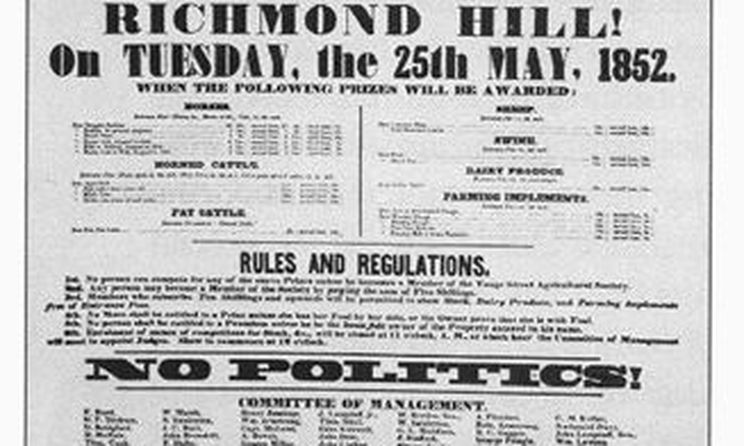
A poster for the Richmond Hill Agricultural Society’s Spring Fair in 1852. This month marks the 25th anniversary since the closing of the society, as well as the city’s final spring fair. – Richmond Hill Historical Society

It may be hard to believe now, as we drive up a Yonge Street lined with plazas and highrise condos, but only a few decades ago, Richmond Hill was flanked east of Bayview and west of Bathurst with family farms.

Farms that had been an integral part of the community, well before the village of Richmond Hill itself was incorporated in 1873.

The Yonge Street Agricultural Society was formed in early April of 1849, and by May 2 of that year had organized a one-day agricultural fair, held on a site west of Yonge Street and south of Arnold.

It was a simple beginning, consisting of mostly farm animal exhibits and competitions, but there was added entertainment in the form of a tightrope walker, performing on a rope stretched above Yonge Street between two hotels, and horse races held on the street itself.

Community historian Mary Dawson, writing in the Liberal years later, tells us that “Since there was no public address system available, a man with a loud voice, mounted on horseback, made the rounds of the hotels calling out the list of events, summoning the thirst quenchers to participate.”

It must have been quite the lively scene.

By 1851, the Fair Committee had settled on the date of the fair as Queen Victoria’s birthday, on or about May 24. Still a one-day event, the fair moved from venue to venue (usually a farmer’s land) until 1866, when it was held at the Town Park at Arnold and Church for the first time.

Since council had asked for a fee of $25 for use of the grounds, admission had to be increased to 25 cents for adults, 10 cents for children and 10 cents with each exhibitor’s entry form.

Fortunately, these fees also covered the cost of the Teston Band, which played live during the festivities for $20.

Initial prize lists focused on livestock judging, as well as harness racing, but in later years other sporting events such as human foot races and a football tournament were added.

By the 1960s, the prize lists had been expanded to include domestic sciences such as needlework and flower arranging, and even prizes for schoolchildren, such as essay writing, penmanship and arts and crafts.

Equine events included show jumping and a Western Horse Show held under the lights in the evening. By now, the fair itself was held over an entire weekend and a small midway was added as well.

For both the fair and the Agricultural Society, 1985 was a significant year, with the election of its first female president.

Kathleen “Kay” Smith, who had worked with the Society for 25 years, was elected, finally acknowledging the dedication of the women behind the scenes in organizing, cooking, baking and arranging events.

In the words of Fred Thomas, a former president himself, “Kay’s the best president they’ve had for quite a few years. She works hard.”

This was also the year the fair moved from the constrained conditions of the Town Park to Richmond Green, where exhibitors and attendees could enjoy purpose-built facilities such as the Pig Barn for animal exhibits, as well as an expanded midway.

However, with the rapid growth of Richmond Hill during the 80s and 90s, the family farms were developed into housing, and interest in agriculture waned.

The Richmond Hill Agricultural Society, and its Spring Fair, ended in 1996, after 147 years. This brief history, therefore, marks the 25th anniversary of its passing.

Those of us who grew up in Richmond Hill in the 1960s remember it fondly.

Mary Jane Celsie is a member of the Richmond Hill Historical Society.

Dr. Duncumb’s Hall — Gone But Not Forgotten

by Norman McMullen
Published in the Richmond Hill Liberal, February 11, 2021

Whatever its fate, the site of the Richmond Hill doctor’s hall holds its place in history, writes Norman McMullen

It’s not likely that many residents of Richmond Hill would be interested in knowing that the Archives Committee at St. Mary’s Anglican Church recently acquired three gnarly and aged yellow bricks.

These items were received following the destruction of Dr. Duncumb’s Hall, formerly located at 10027 Yonge St., almost directly opposite the church.

The future of the property that formerly hosted Dr. Duncumb’s Hall, located at 10027 Yonge St. in Richmond Hill, has been under discussion for some time. – Richmond Hill Historical Society

The future of the property has been under discussion for some time, and late last year, the building met its fate; some have said “demolition by neglect”.

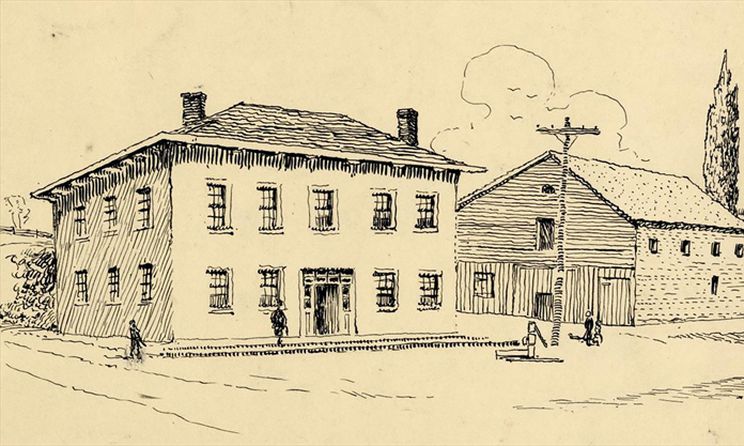
Built for Dr. John Duncumb between late 1857 and 1861, the building served as a courtroom, where he presided as a Justice of the Peace.

His career was short-lived, due to “financial indiscretions” and the structure was eventually converted into a public hall.

Between 1864 and 1872, it served as a place of worship for the local Anglican congregation. Apparently some of the faithful even referred to the structure as “Dr. Duncumb’s Church”!

After Dr. Duncumb’s death by 1875, the hall was renovated for residential use by Lucy Nicholls. Through Lucy’s son Hesse and his wife, the property remained in the family until 1963.

After that, several major modifications were made to the building, allowing rental space for various businesses. Sadly, its gradual decline continued as well.

The Hall was built in a classic revival style, representative of popular designs often used for early official buildings.

According to a York Herald notice in February, 1862:

“On Thursday evening, the 13th inst., Dr. Duncumb opened his Hall in a grand manner. We understand about 200 ladies and gentlemen were present. The doctor entertained his guests in first-rate style to wine and cake; and having engaged the Quadrille Band from Toronto, dancing was the order of the night.”

It is believed to have been one of the earliest brick structures in Richmond Hill, representing an important part of our early justice system, public entertainment, community events, meetings and church services.

It is interesting to note that with the establishment and naming of St. Mary’s in 1872, the congregation simply moved across the street. Dr. Duncumb continued his connections with the Anglicans, although he was frequently at odds with Clergy and some parishioners — especially John Robert Arnold, who was no doubt an entrepreneurial competitor.

It was Arnold who donated the land for establishment of St. Mary’s.

Dr. Duncumb’s death was noted by the York Herald’s obituary of Dec. 10, 1875:

“…Having resisted his native country, (Beverley, Yorkshire, England) he returned to Canada in 1837, and a few years later took up his residence in the Village, where by his professional skill and shrewd business talents, he acquired considerable property; but his career, successful though it was, like all other earthly careers, came to a close, and his powerful frame, in obedience to the common law of nature, yielded to the fierce onslaughts of the grim monster, his lion head was bowed and his stentorian voice was hushed in death…”

So even though his hall has vanished, the bell continues to ring today, in tribute to this remarkable citizen of Richmond Hill.

It is comforting to know that the city directed the Heritage and Urban Design staff to carefully remove any items of historic and architectural significance, prior to demolition of the hall.

I understand this includes the following: About 70 pieces of whole heritage bricks, the original fan-shaped window and three flat head windows, along with two stained glass windows.

These items are now safely stored at the Operations Centre. Hopefully these items will reappear in whatever structure that continues the fascinating story of Dr. Duncumb’s hall.

Norman McMullen is a member of the Richmond Hill Historical Society and Chair of the Archives Committee at St. Mary’s Anglican Church.

The Upper Canada Rebellion of 1837: Richmond Hill had a Ringside Seat

Originally published in the Richmond Hill Liberal, September 24, 2020
by Jim Vollmershausen

While the events that led to the Rebellion of 1837 were unfolding, the citizens of Richmond Hill were not on the outside, looking in – they were right in the middle of it.

The Moodie House – courtesy Richmond Hill Public Library

In the decades following the arrival of the first settlers, the Richmond Hill area became a thriving agricultural community, served by many shops and businesses. By the 1830s, this prosperity began to attract a more affluent group of settlers who were buying up properties and beginning to influence local politics.

These newcomers tended to be British, Church of England, more well-to-do, and much more apt to turn to the ruling elite in York for assistance. The original settlers were much more self-sufficient. They had cleared land, built cabins, sowed crops and gained title to property. In their experience, the government in York did not have their interests at heart. By 1830, these two groups of Richmond Hill residents clearly represented the simmering conflict in Upper Canada between the ruling tories and the less-privileged reformers.

The man who came to lead the reformers was William Lyon Mackenzie. In the years leading up to 1837, Mackenzie worked tirelessly to effect reforms through his work in the assembly, his newspaper columns – he even took his grievances to Britain. Consistently rebuffed, by 1837, he was beginning to call for armed revolt.

Richmond Hill’s tory contingent – the Moodies, the Gappers, the O’Brians, and others – were not impressed with the reformers demands. Their view was that they were well served by the government in what was now known as Toronto.

Other families in Richmond Hill, however, were much more receptive to the reformers’ call for change. A couple of years of poor harvests, coupled with an economic recession that included tighter credit and the recall of loans made for very difficult times for farmers. By early December of 1837, MacKenzie’s call to arms seemed like a good option.

Emboldened by troops leaving Toronto to help suppress a rebellion in Lower Canada, men from Richmond Hill and areas to the north began to gather in response to MacKenzie’s appeal to take up arms. On Monday, Dec. 4, they began to march down Yonge Street from places like Holland Landing, picking up supporters as they went. Later that afternoon, Captain Hugh Stewart observed the marchers as they passed by Crews Tavern, just north of Richmond Hill, and raised the alarm. A number of loyalists met at Robert Moodie’s house, just south of the tavern.

David Bridgeford – courtesy Richmond Hill Public Library

After a first attempt to warn the forces in Toronto about the rebels failed, Moodie, his friend David Bridgeford, and others decided to ride south. Moodie, Bridgeford and Captain Stewart made it as far as Montgomery’s Tavern, near Eglinton Street, where the rebels were gathering. After being confronted by rebel guards, shots were fired, Moodie was fatally shot and Stewart was captured. David Bridgeford was able to evade the rebels and made it to Government House. By Dec. 7, there had been one skirmish south of Montgomery’s Tavern and a final, albeit short battle at the tavern itself – and the rebels were defeated.

In the end, Richmond Hill saw it all. The village contributed tory loyalists and rebel reformers to the Rebellion of 1837. A tory stalwart, Robert Moodie, was killed on the first day of action, and many rebels were captured and imprisoned. Though the rebels were defeated, their reform views did not disappear. In the thirty years between the rebellion and confederation, many of their issues were part of the ongoing process of change.

-Jim Vollmershausen is the president of the Richmond Hill Historical Society