Tuesday, February 17, 2026; 6:30 pm Speaker: Jessica Allen
We are very excited to welcome Jessica Allen to our February meeting to speak to us about Grace Marks, a key figure in a key historical event in Richmond Hill in 1843.
This talk explores one of the most enduring historical mysteries in Canadian history: the story of Grace Marks, convicted in 1843 for the murders of Thomas Kinnear and Nancy Montgomery. Using trial records, found archives and newspaper coverage, the presentation looks at domestic service in 1840s Richmond Hill and the social realities faced by young working women, then traces the case from the events surrounding the murders through the investigation, the trial, and Grace’s imprisonment at Kingston Penitentiary. The talk also highlights the local connections that bring the story into the Richmond Hill area, and ends with the unresolved question that has kept the case alive for more than 180 years: what happened to Grace Marks after she disappeared from the historical record.
We invite you to join us at 6:30 pm in Room B at Richmond Hill Public Library’s Central Library at 1 Atkinson Street on Tuesday, February 17, 2026. We will begin the evening with some social time before Jessica’s talk at 7:00 pm.
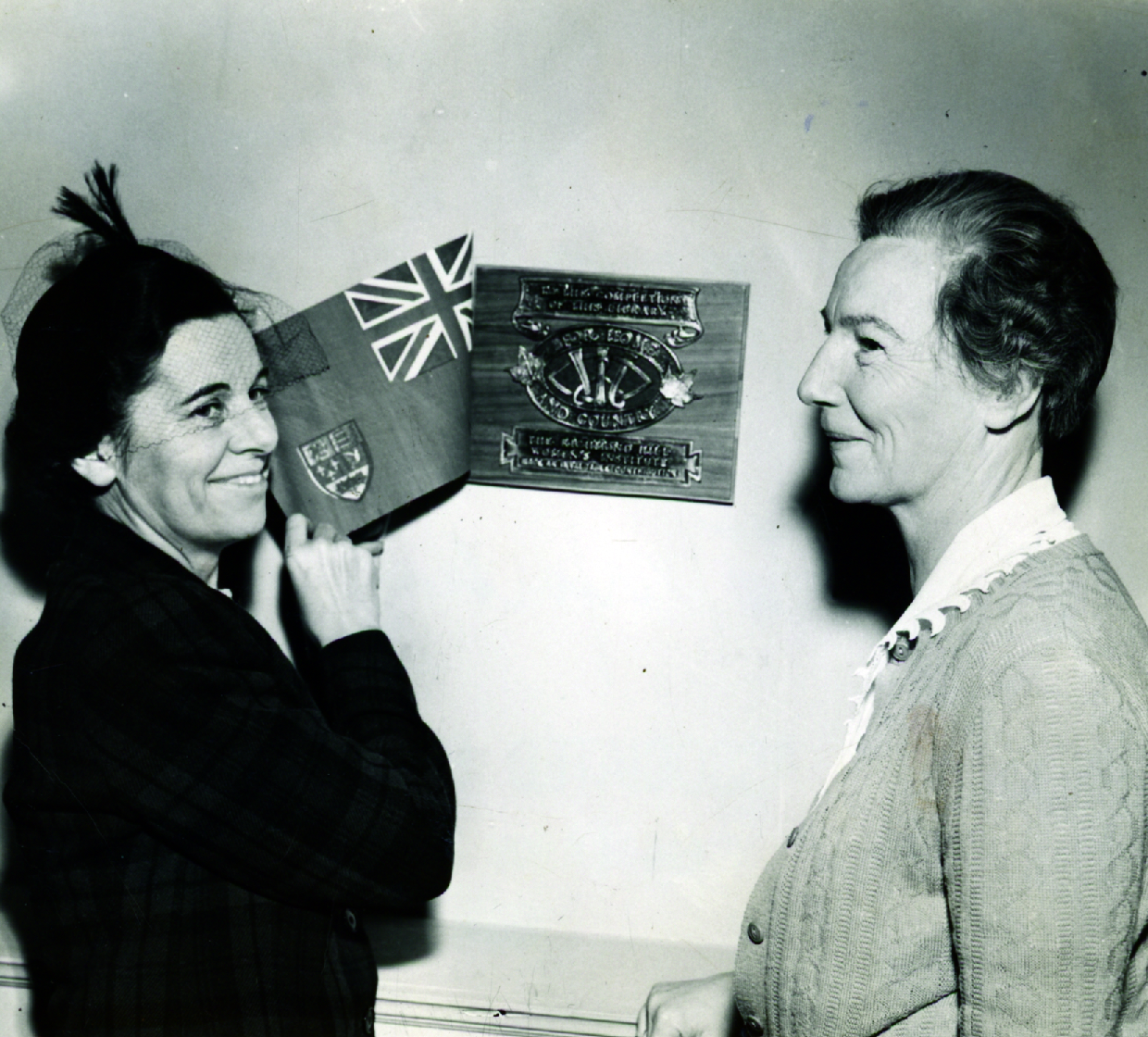
Mrs. H. H. MacKay unveiling the Women’s Institute plaque with Edna Izzard representing the Library Board. The plaque commemorates the Institute’s contribution to the library in 1949. (Richmond Hill Public Library, Tweedsmuir History Fonds)
The first Women’s Institute (WI) was formed in Stoney Creek, Ontario on February 19, 1897 by Erland and Janet Lee, who invited approximately 100 women to hear educational reformer Adelaide Hoodless. Ms. Hoodless turned the personal tragedy of the death of her 14 month old son into a movement that encouraged women to see the importance of domestic science education and to be advocates in areas of health, education and community service. Since its inception, there have been upwards of 1,500 branches of the WI across the province of Ontario. While most have disbanded over the years, the Institute continues with 220 active branches across the province. Their motto “For Home and Country” was adopted by the Institute around 1904.
RICHMOND HILL WOMEN’S INSTITUTE
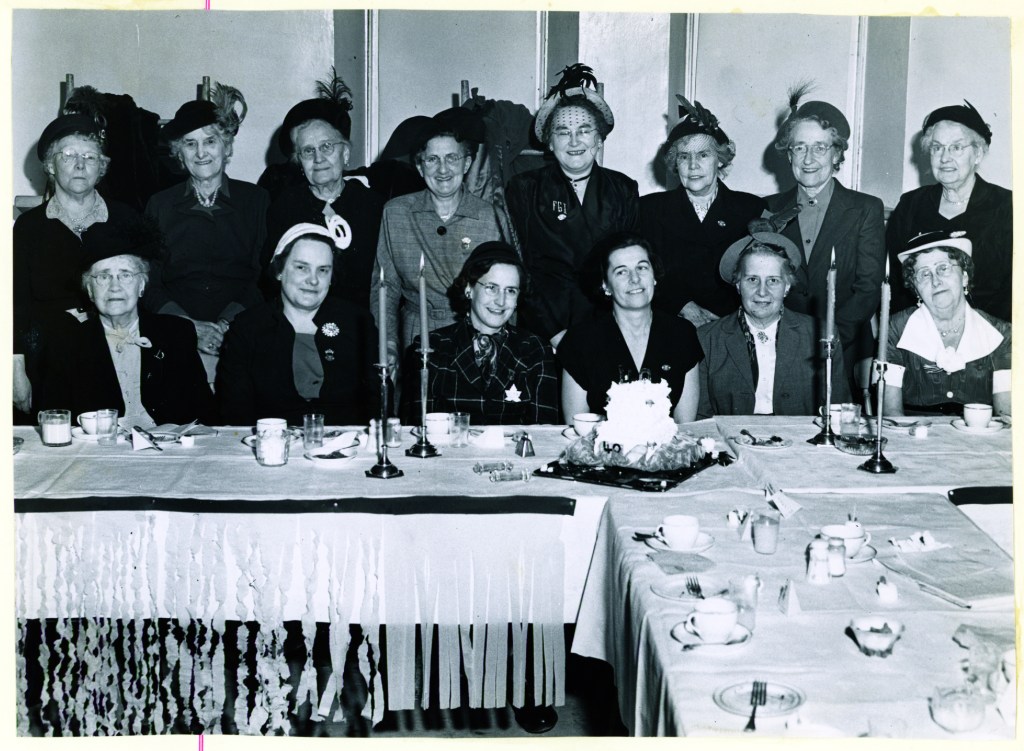
Head table at the 40th Anniversary of the Richmond Hill Women’s Institute, January 8, 1953. (Richmond Hill Public Library, Tweedsmuir History Fonds, 079a)
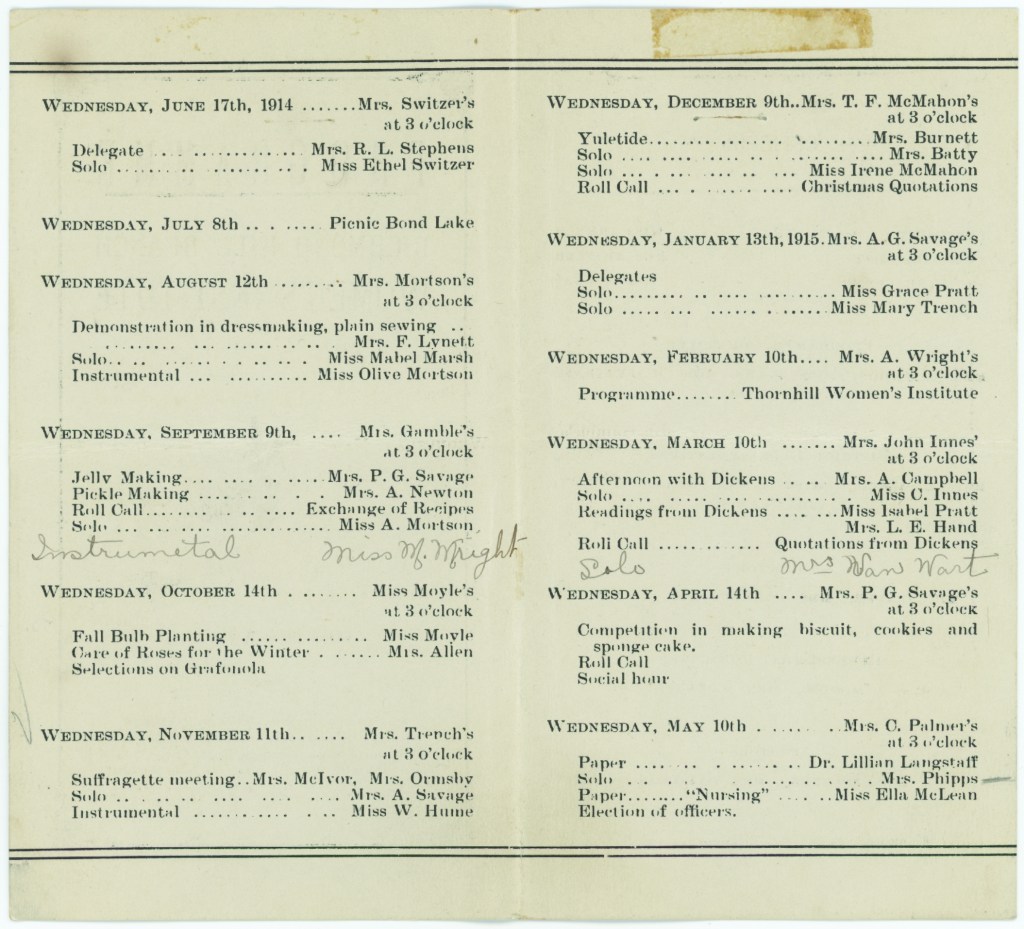
The Richmond Hill branch of the Women’s Institute (RHWI) was formed in 1913 and held its organizational meeting on January 27th at the Masonic Hall on Yonge Street. The first keynote presentation was delivered by Dr. Lillian Langstaff, who spoke on the topic of “Facts about Flies,” beginning a long history of talks on home economics and health. Presentations and demonstrations included sewing and dressmaking, baking, canning and preserving, flower arranging and more. Monthly meetings presented opportunities to socialize, learn and develop skills, pursue personal interests, but perhaps most importantly, to plan and carry out work to the benefit of the entire community.
Richmond Hill Women’s Institute Program for 1914-1915 (Richmond Hill Public Library, Tweedsmuir History Fonds, 075-01a)
The lasting impact of the RHWI was in their educational, charitable and civic-minded pursuits. Some key highlights included: the introduction of medical inspections in schools resulting in the appointment of school nurses; actively working towards obtaining the rights of women to vote; advocating for playgrounds for children; the introduction of litter receptacles on Richmond Hill streets and the beautification of village in cooperation with the Richmond Hill Garden and Horticultural Society; and the donation of pianos and other furnishings to our elementary and secondary schools. The Institute also undertook years of advocating and fundraising for a new public library building, which culminated in a donation in 1949 of over $1,700 dollars. That library would eventually be built on Wright Street in 1959.
The Women’s Institute also undertook war and relief work, which began in 1914 with the purchase of cloth to be rolled into bandages for a women’s hospital ship. In that same year, food was gathered for soldier’s families in need. Collections were undertaken for Belgian and Armenian relief. Members helped support the Red Cross as well as providing donations for war relief. During the Depression, they undertook relief work, in cooperation with teachers, for the unemployed.
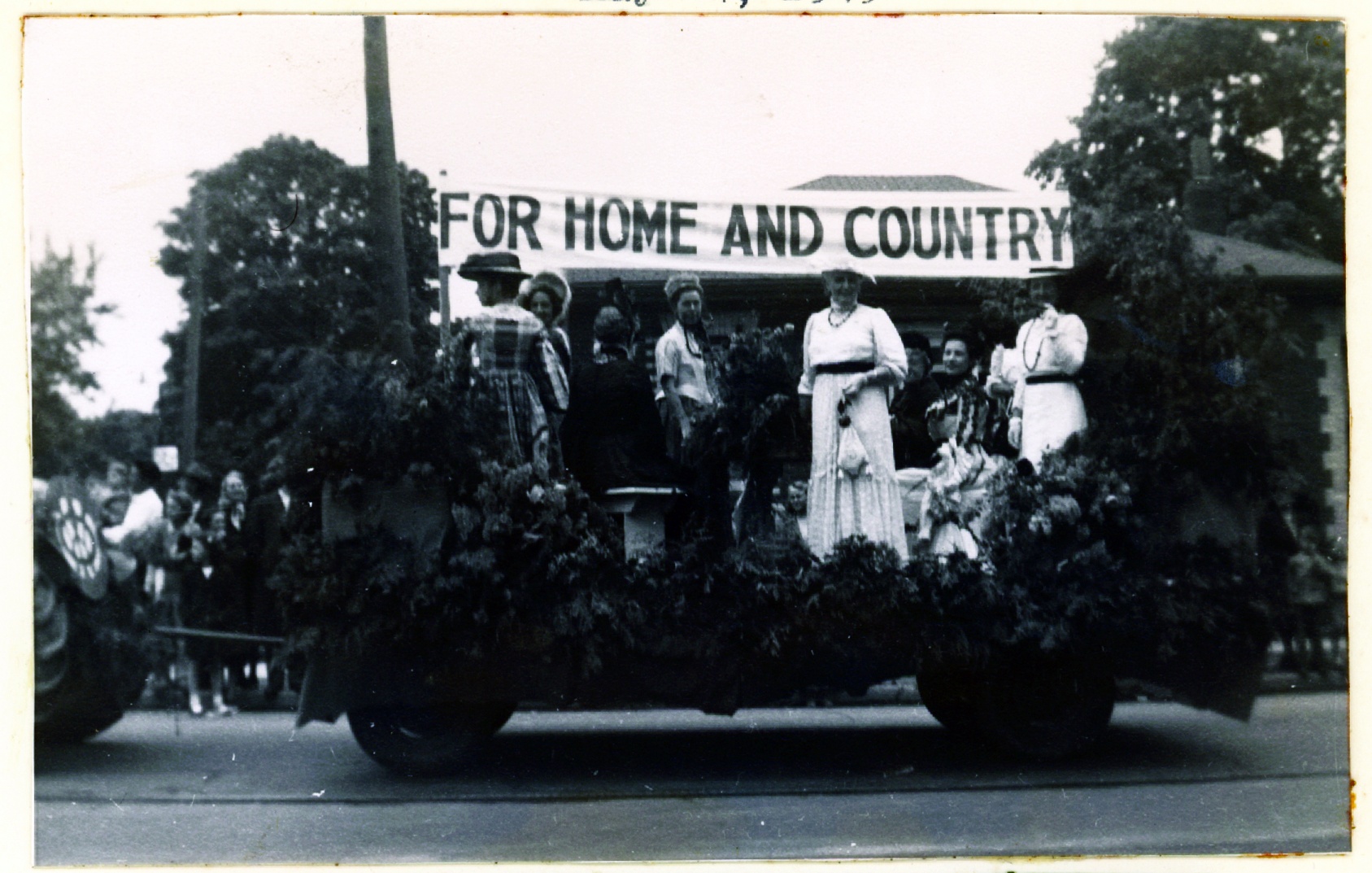
Richmond Hill Women’s Institute float during parade to commemorate the 100th anniversary of the Richmond Hill Agricultural Society, May 24, 1949. (Richmond Hill Public Library, Tweedsmuir History Fonds, 080a)
Representatives of the Richmond Hill WI were appointed to a number of boards across the community, where they were able to add an important voice to decisions being made for the benefit of all. Their focus on women’s issues and education positioned them well for having a profound and valuable impact to the lives of residents. Their spirit and drive helped them support many in need, not just in our community, but around the world. Their accomplishments and impact on people’s lives is impossible to fully articulate here.
TWEEDSMUIR HISTORY OF RICHMOND HILL
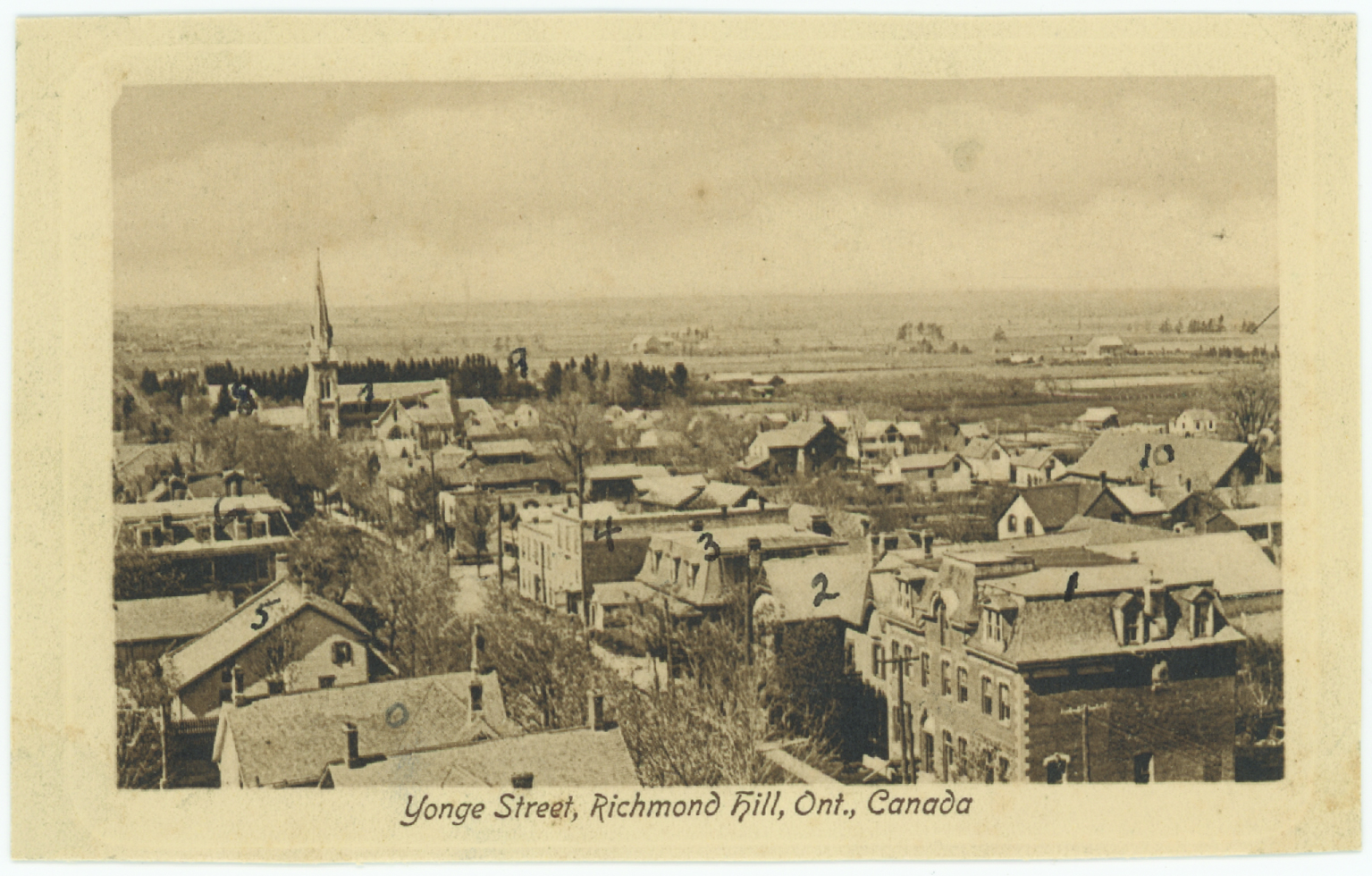
Postcard of Yonge Street looking north from the steeple of the Richmond Hill Presbyterian Church in 1908 from the Tweedsmuir History of Richmond Hill. (Richmond Hill Public Library, Tweedsmuir History Fonds)
One of the most valuable and enduring legacies of the RHWI is the Tweedsmuir History of Richmond Hill. The Richmond Hill Public Library holds the original and digitized copies. The Tweedsmuir History Books, chronicles of local history, were created all across Ontario in the name of John Buchan, The Right Honourable The Lord Tweedsmuir, Governor General of Canada from 1935-1940.
The Tweedsmuir History of Richmond Hill was begun in April 1949 and transferred into its final form in 1957. The work was coordinated by their Tweedsmuir History Committee and is in the form of a scrapbook with a mix of typed and scrapbook pages. It contains a number of photographs, newspaper clippings, postcards, letters, family histories, and other ephemera covering a wide variety of current events of the day, local individuals and families, and historically significant local events.
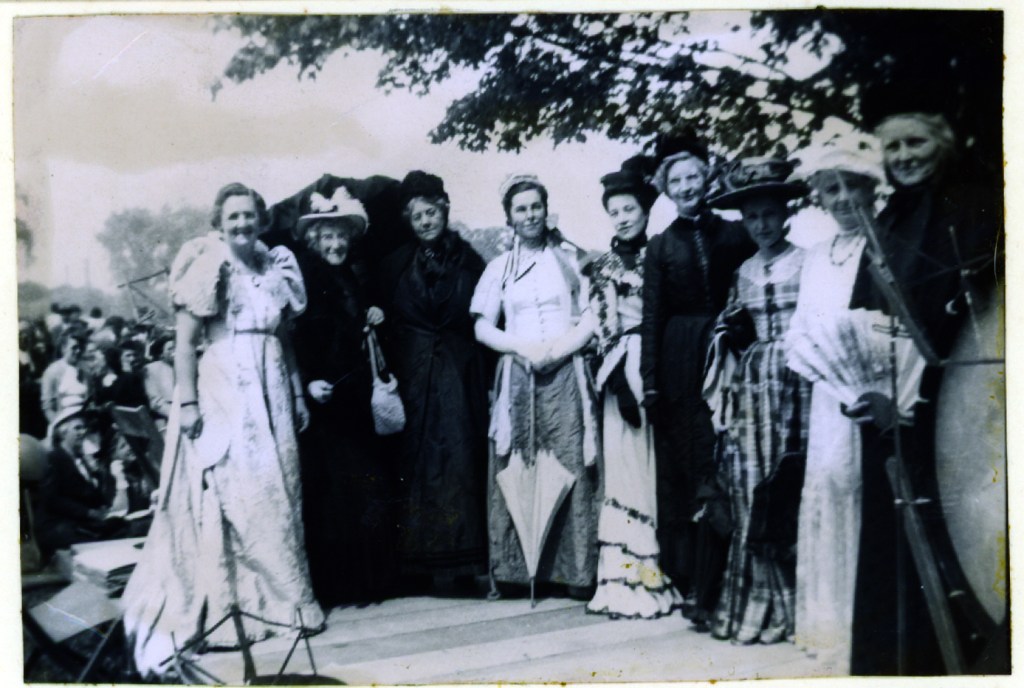
Members of the Richmond Hill Women’s Institute in costume to commemorate the 100th anniversary of the Richmond Hill Agricultural Society, May 24, 1949. Left to right: Mrs. W. Sayers, Mrs. O.L. Wright, Mrs. J.P. Wilson, Mrs. H.H. Mackay, Mrs. Rabinovitch, Mrs. Blanchard, Mrs. Pipher, Mrs. N. Glass, Miss Annie Stong. (Richmond Hill Public Library, Tweedsmuir History Fonds, 080b)
They say that all good things must come to an end and this is what transpired for the RHWI, officially disbanding in 1964. For a write up of the end of the Institute, see “Richmond Hill Women’s Institute,” in The Liberal, June 25, 1964, p. 2 (https://history.rhpl.ca/3216109/page/3). For home and country and for everything (and everyone) in between; our lives and communities have been made better from their enduring legacy.
Peter Wilson is a librarian at the Richmond Hill Public Library and editor of the Richmond Hill Historical Society’s newsletter and website.
• a history and records of achievement of the Institute
• recounting the early days in Richmond Hill
• biographies of early settlers: Abner Miles, Hugh Shaw, Col. Wilmot, John Stooks, Col. David Bridgford, James Miles, John Stegman, the de Puisaye settlers, Quetton St. George, Col. Robert Moodie, the Playters and the Langstaff family
• a history of Yonge Street
• a history of early mills in Richmond Hill
• biographical sketches of notable past residents: Amos Wright, William Wright, William Powell, Susannah Maxwell, Matthew Teefy, Alex Hume, Thomas McMahon, Nicholas Miller, William Trench, Francis Boyd, the Wilkie family, Robert Marsh, John Switzer, David Boyle, Samuel Thompson, John Coulter, Leslie Innes and Robert Hopper
• listing of the village residents of 1871
• listing of Reeves and Councillors
• school and church histories
• history of the mechanics’ institute and library
• unique historical documents related to Thomas Kinnear, murdered with Nancy Montgomery in 1843
• residents who served in First and Second World Wars
• histories of the Atkinson and Trench families
• reminiscences of Dr. Rolph Langstaff (1950s)
• extensive coverage of current events of the 1950s
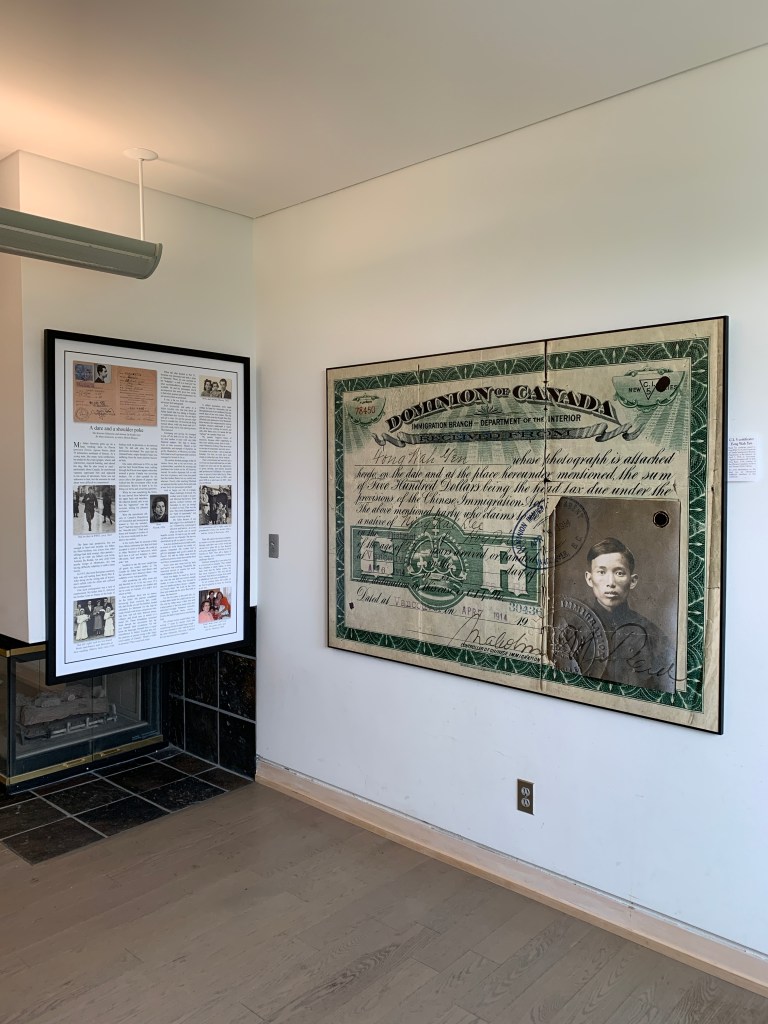
A new inspirational art installation at Central Branch that delves into the immigrant experience with stories of strength, courage, sacrifice, and hope.
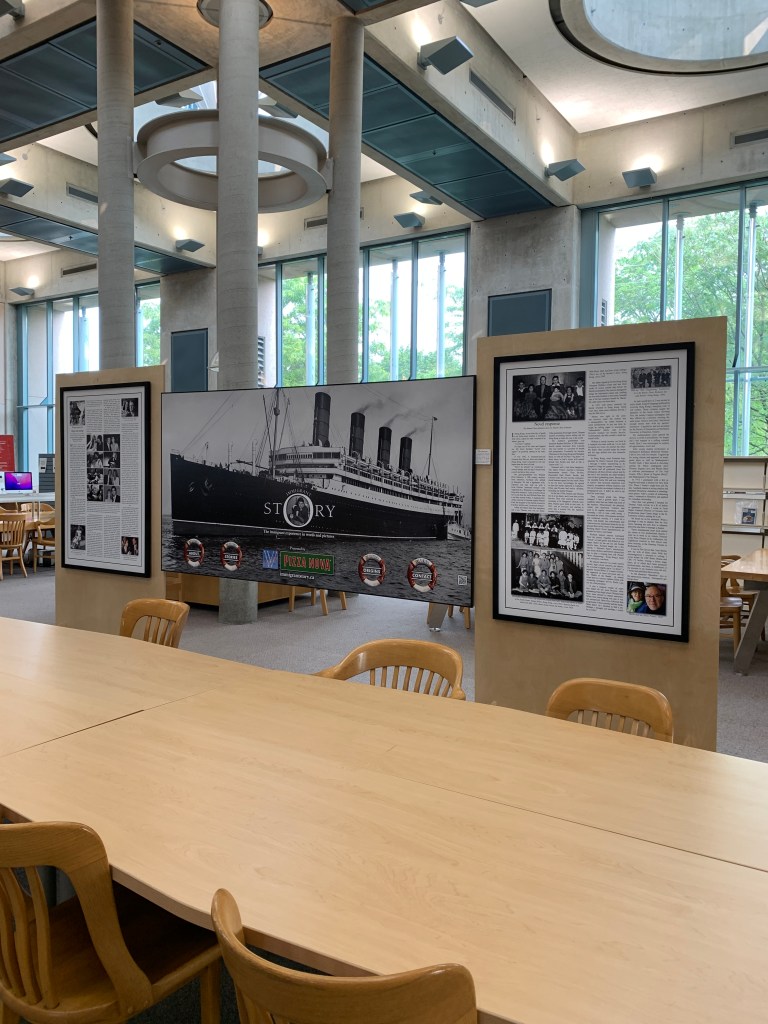
The Immigrant Story Exhibit runs from June 27 – August 23, 2023 at the Central Branch of Richmond Hill Public Library (photo by Peter Wilson)
Richmond Hill is an incredibly diverse City of individuals from all over the world that help contribute to our community in so many ways. Immigrants play a vital role in the development of our country and in the broadening of our lived experiences. Come and immerse yourself in these compelling stories.
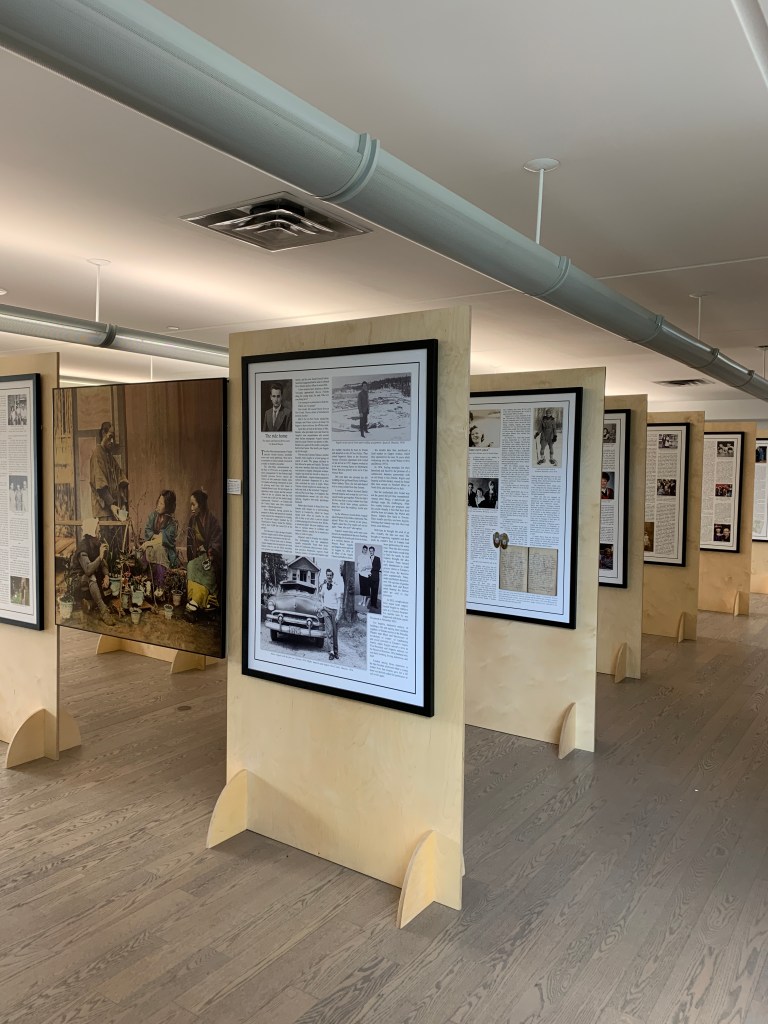
A sampling of the large display panels located in the 3rd Floor Event Room at Central Library (photo by Peter Wilson)
Sholom Wargon developed the art installation through large-print story panels in a newspaper-style layout. The rich diversity of immigrant stories from various perspectives and cultural backgrounds will resonate with many in the York Region community.
The exhibition at Central Branch runs until August 23. Central Branch is located at 1 Atkinson Street (near the corner of Yonge Street and Major Mackenzie Drive).
The exhibit contains a large variety of photographs and documents that help tell these amazing stories. (photo by Peter Wilson
Learn more about The Immigrant Story and its creator, Sholom Wargon by visiting the exhibit’s official site at https://immigrantstory.ca/.
This is an exhibit worth multiple visits so stop by today.
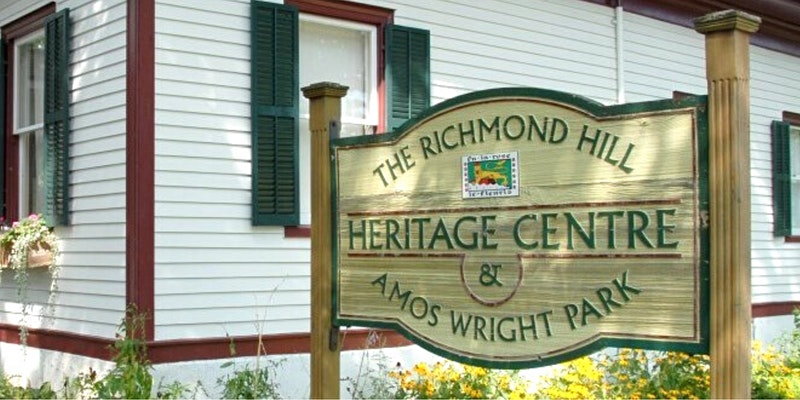
The Richmond Hill Heritage Centre and Amos Wright Park at 19 Church Street North
The Richmond Hill Public Library is excited to welcome Richmond Hill Heritage Services for two upcoming library programs. In May, we’ll look at spaces, places and stories of our City’s unique heritage; and in June, we’ll learn about how Heritage Services acquires and collects artifacts and go on a tour of the Artifact Storage Facility. Both programs are free, but preregistration is required.
Heritage Designation Saturday, May 8, 2021 10:00 am – 11:00 am; via Zoom
Under the Ontario Heritage Act, municipalities can pass bylaws to formally designate properties of cultural heritage value or interest – acknowledging a property’s heritage value to a community. At the same time, designation helps to ensure the conservation of these important places for the benefit and enjoyment of present and future generations. In this program you will learn more about how we can protect our city’s cultural fabric. Visit Eventbrite to register.
A Museum Collection Saturday, June 5, 2021 10:00 am – 11:00 am; via Zoom
Attend a virtual behind-the-scenes tour of the Artifact Storage Facility. Learn about what we collect, how to acquire artifacts, and how to preserve them and get a preview of the newly renovated Heritage Centre. Visit Eventbrite to register.
To learn more about the Richmond Hill Public Library, please visit www.rhpl.ca/.
This past February, Richmond Hill Public Library’s Local History and Genealogy Librarian Peter Wilson shared the story of Susannah Maxwell, one of Richmond Hill’s prominent historical figures with the Richmond Hill Liberal.
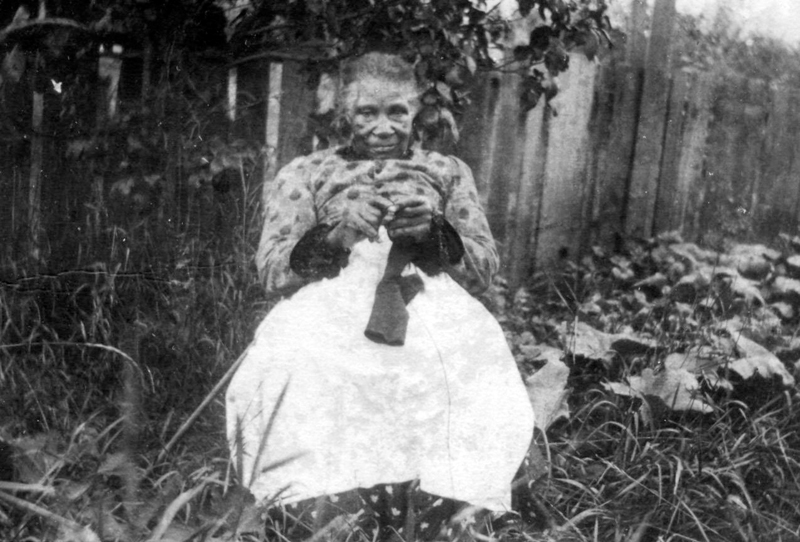
Susannah Maxwell, circa 1880s (courtesy of the Richmond Hill Public Library)
At the time of her death in February of 1923, she had reached the astounding age of 117 and only a month short of her next birthday. She was likely the oldest person in Canada at the time of her death, made even more remarkable by the life she led. Born to free black parents in Lancaster County, Pennsylvania, she barely escaped being captured and sold into slavery after the passing of the Fugitive Slave Act of 1850. She and her family escaped to Canada via the Underground Railroad, eventually settling in the Brick Tenement on Yonge Street across from St. Mary’s Anglican Church.
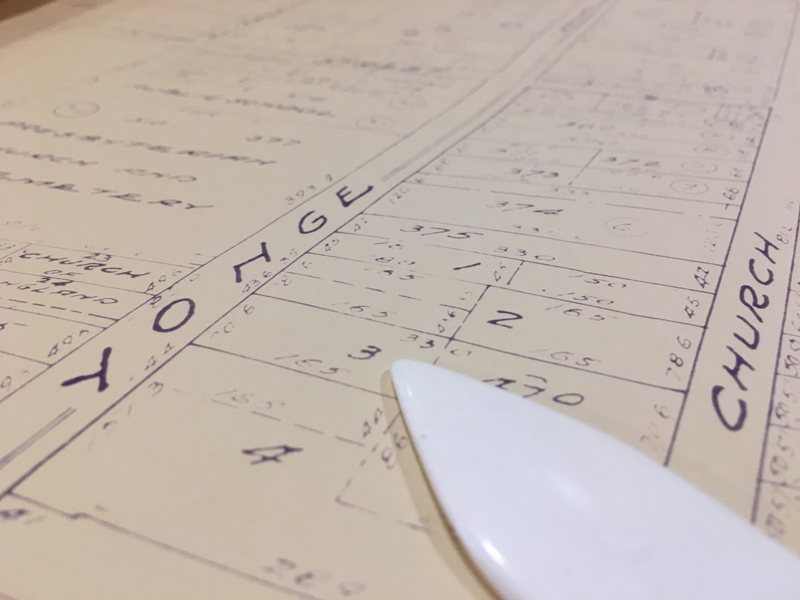
Lot 3 on Yonge Street (courtesy Richmond Hill Public Library)
While Susannah could earn what was known as a York Shilling, or about 12.5 cents per day in Richmond Hill, she could make as much as 50 cents per day 7 miles away in Markham. To support her family she would make the trek until she collapsed on her way home in a blizzard. She likely would have died if she had not been found by a dog who alerted others to her location. She eventually ran a laundry business out of her home with two of her daughters, Mary and Matilda, or Tillie as she was known. Mary died in 1899 and the Village Council agreed to pay for her funeral and grave in the Presbyterian Cemetery. Tillie died in 1920.
Susannah was an early orphan, and early widow and a mother who outlived all of her children.
Read the full story in the Richmond Hill Liberal. The story was also picked up by CityNEWS and was broadcast on February 28, 2019 and is viewable through their website.
 Richmond Hill Historical Society